A lot of businesses are sitting on valuable leads but still making less money than they should. Why? Because their leads are being sold the old way.
Ping post platforms help businesses maximize lead value by creating instant competition between buyers, which can lead to higher payouts and faster conversions. Companies that understand ping post systems usually outperform competitors still using fixed lead pricing models.
In this guide, you will learn the basics of ping post platforms and why businesses use them to increase profitability.
TL;DR
- A ping post platform auctions leads in real time before sending the full customer details to the winning buyer.
- The “ping” shares limited data like ZIP code or service type so buyers can decide whether to bid.
- The “post” delivers the complete lead record after the auction closes.
- Roofing, insurance, mortgage, and affiliate businesses use ping post systems to increase lead value and speed up routing.
- Standard Information combines routing, bidding, validation, reporting, and automation into one platform.
What Does “Ping” Mean in Ping Post?
A ping serves as a preview before the sale.
During this step, platforms send limited lead data (the ping) to potential buyers to check interest before sharing private customer data. To protect privacy, the platform only shares a partial snapshot of the request during the auction stage.
Most platforms include specific lead attributes like age or project type, along with:
- Lead’s ZIP code
- Service category
- Loan range
Buyers review that data to determine whether the lead matches their campaign rules before the auction moves forward.
At this point, the platform creates a version of the data known as a partial lead. Buyers only receive limited information during the auction, which helps reduce unnecessary data exposure.
Since the system will keep the lead’s personal information hidden during the auction, sellers can protect customer privacy while collecting bids in real time.
What Does “Post” Mean in Ping Post?
After bidding ends, the final data transfer occurs during the post stage. At this point, the platform identifies and selects the winning buyer based on bid price, routing logic, or campaign rules.
Once the sale closes, the buyer receives the complete lead record to start outreach immediately. The platform unlocks the full lead record once the winning bid is confirmed, including phone numbers, addresses, service requests, and consent records.
For home service campaigns, the platform may also provide the homeowner’s contact details for immediate follow-up before competitors reach the customer first.
Delivery usually happens through APIs, webhooks, CRM integrations, or email notifications. During this step, the post delivers the actual “goods” to the purchasing system after the auction finishes.
Complete lead data also helps sales teams start outreach immediately after delivery.
What Businesses Use a Ping Post Platform?
Ping post platforms work best for businesses, such as:
Home Service Companies
Home service companies use ping post systems heavily, especially contractors in home improvement, like roofing, plumbing, HVAC, solar, and water damage repair.
Lead sellers often run quote websites where homeowners request estimates. Once the form gets submitted, the platform instantly pings local contractors to see which contractors are most interested in the lead. Buyers then place bids based on service area, job type, and current demand.
Roofing companies may bid more aggressively after storms. HVAC buyers usually raise prices during summer heat waves or winter furnace outages.
Insurance Lead Companies
Insurance campaigns depend heavily on speed and filtering, which explains why huge volumes are handled by insurance lead companies through ping post systems every day.
Insurance lead companies use these platforms to manage millions of “pings” every day, matching specific consumer needs with the right insurance agents or carriers in real time.
Each type of insurance uses different data in the “ping” to decide what to bid:
- Auto insurance: The ping includes things like the driver’s age, the type of car, and whether they currently have coverage.
- Health insurance: The ping might include general health history or Medicare eligibility.
- Home insurance: Buyers usually review property value, ZIP code, and ownership status.
- Life insurance: Age range and smoking status often affect bid pricing.
Many carriers also rely on comparison websites where customers request several quotes through one form.
Affiliate Networks and Publishers
Affiliate networks and publishers use ping post systems to increase the value of every visitor that comes to their websites. Instead of selling leads at one fixed price, they auction traffic to buyers competing in real time.
One buyer may stop accepting traffic after reaching a budget cap. When that happens, the platform instantly moves the lead to another active buyer instead of rejecting the sale completely.
That prevents publishers from losing monetization opportunities when buyers hit budget caps.
Agencies and Marketplace Operators
Large agencies often manage hundreds of lead sources at the same time, making automation necessary once traffic volume starts growing. Many lead generation companies use these systems to automate sales and process thousands of leads daily without manual entry.
Agencies use ping posts to let their clients’ budgets compete. If one client has a higher budget for “roofing” leads today, the system automatically “posts” the leads to them first.
Marketplace operators also control bid rules, routing priority, timers, and filters from one dashboard rather than managing each buyer manually.
Main Features to Look for in a Ping Post Platform
The best ping post platforms do much more than run auctions. They have:
Real-Time Lead Routing
Real-time lead routing is the “brain” behind a ping post platform. It decides exactly where a lead should go and how fast the transfer should happen.
Most companies rely on this system as the core engine for ping post lead distribution.
Routing rules usually depend on location, budgets, schedules, and lead type. For example, these platforms can route leads based on credit scores, ZIP codes, or loan amounts. Contractors often use automated rules to route leads to local pros instead of wasting money on requests outside their territory.
The right systems speed up the lead distribution process to milliseconds. Buyers can create filters that deliver leads based on specific geographic rules, bid amounts, or office hours.
That helps ensure leads reach the right buyers before customer interest fades.
Ping Post Lead Auctions
Most platforms run real-time lead auctions to find the best price.
During the ping stage, the system can invite multiple buyers to bid on the same request. Better platforms ping multiple buyers simultaneously to spark competition before routing the lead.
Pricing changes constantly depending on lead quality and buyer demand. Platforms use real-time bidding to adjust payouts instantly based on urgency, location, or campaign activity.
Some systems organize buyers into tiers. “Tier 1” buyers may see the lead first because they pay more, while lower tiers only enter the auction if the top group passes.
Once bidding ends, the system automatically sells the data to the highest bidder and notifies the winning bidder immediately. Competitive bidding determines lead pricing dynamically based on demand and buyer urgency.
Lead Validation Tools
If you send a buyer a lead named “Mickey Mouse” with a phone number like “555-555-5555,” the buyer will probably stop doing business with you. Lead validation tools check every lead for accuracy and honesty before you try to sell it.
Most platforms use automated validation tools to scrub phone numbers and emails. The system instantly checks if a phone number is active and reachable. It checks email addresses too, making sure the contact information belongs to a real person.
Some platforms even use “Bot Detection” to see if a human filled out the form or if software tried to submit fake requests. With fraud protection systems, you can block suspicious traffic before it enters the auction.
Legal checks happen during this stage too. Many systems verify permission records through consent capture tools tied directly to the form submission. If the data is fake, like a disconnected phone number, the platform rejects the lead immediately.
Advanced Buyer Filters
Buyer filters control who sees a lead and who gets blocked from the auction. Most buyers want strict rules tied to geography, budget, service type, or customer profile.
Platforms usually let every lead buyer create custom settings before bidding starts. Buyers can upload lists of thousands of ZIP codes, cities, or entire states to ensure they only bid on leads in their service area.
Finance and insurance campaigns often use more detailed filters. One lender may only purchase applicants above a certain credit score, while another company focuses on debt relief traffic instead.
Many systems also compare requests against specific buyer criteria like loan amount, property value, or service category. After filtering finishes, the platform narrows the auction down to only eligible buyers.
No-Code Buyer Integrations
Integrations decide how quickly buyers can start receiving traffic.
Modern ping post software should offer setups that connect CRMs, APIs, and webhooks visually. A roofing company should not need a developer just to start receiving leads.
For instance, integrations let buyers receive leads directly into their CRM after the auction closes.
Faster integrations make onboarding easier and help buyers start receiving leads sooner.
Real-Time Reporting and Analytics
Sellers often use reports to monitor traffic quality, buyer activity, and auction performance throughout the day.
A ping post platform should be able to track which lead source is making the most money, rather than grouping all traffic together. One campaign may generate high payouts while another source quietly loses money in the background.
Detailed reports help you review performance data tied to buyers, bid prices, and response activity.
Some systems also track historical sales patterns. If one buyer consistently struggles to close a certain type of traffic, the platform can reduce how often those leads get routed there.
Reporting tools also help teams identify slow buyers, routing issues, and underperforming campaigns before revenue drops.
Benefits of Using a Ping Post Platform
Ping post systems became common because they help sellers maximize lead value while giving buyers more control over cost, targeting, and routing decisions.
Instead of relying on fixed pricing, businesses can auction leads in real time and let demand determine the final value. That creates stronger monetization opportunities for publishers and lead sellers while helping buyers pay only for leads that match their campaign requirements.
These systems also improve routing speed. If one buyer stops accepting traffic after reaching a budget cap, the platform can immediately move the lead to another active buyer instead of letting the opportunity expire. Faster routing keeps lead flow moving throughout the day and helps sellers continue monetizing traffic even during volume spikes.
For buyers, ping post platforms reduce wasted spend by filtering out bad traffic, wrong ZIP codes, and low-quality submissions before delivery. Buyers only receive leads that match their filters, budgets, and targeting rules, which helps improve conversion rates and sales efficiency.
Many businesses also use ping post systems to simplify lead buying and distribution at scale. Real-time auctions and automated routing help marketplaces manage large lead volumes without relying on manual workflows.
Simplify Lead Buying and Selling With Standard Information
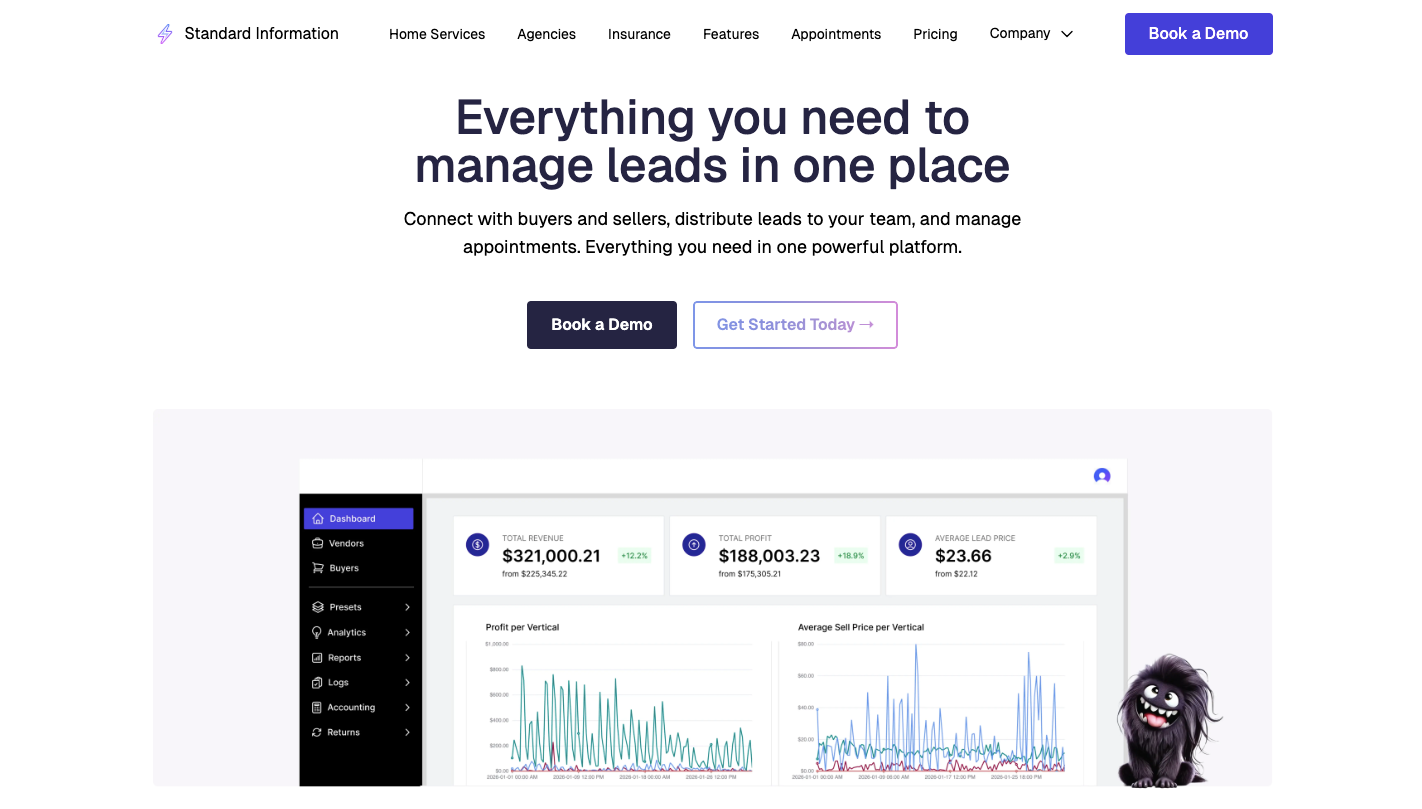
Standard Information brings routing, auctions, validation, integrations, and reporting into one platform so businesses can control the entire ping post process from one place.
Real-Time Lead Routing and Auctions
Every lead enters the system with different rules tied to location, budgets, schedules, and buyer demand. Standard Information checks those conditions instantly before deciding where the lead should go next.
When one campaign stops accepting traffic, it immediately checks the next available buyer rather than letting the request expire.
Auction settings give teams more control over lead distribution strategies, too. Some buyers may want exclusive traffic at higher prices, while others focus on lower-cost shared leads. Standard Information lets you control bid floors, routing order, and auction timing directly from the dashboard.
Advanced Lead Validation
Low-quality traffic destroys buyer trust quickly. One fake submission with a disconnected phone number can create refund requests, complaints, and lost revenue.
Standard Information checks emails, phone numbers, duplicate records, fraud signals, and blacklist entries before the auction even begins. Suspicious traffic never reaches buyers if the validation checks fail.
No-Code Buyer Integration Builder
CRM integrations usually slow onboarding down once custom field mapping enters the process. Standard Information avoids that problem through visual setup tools that help teams connect buyers faster.
Users can map fields, configure responses, and test delivery rules without relying on developers.
AI Call Center and Automation
Fast response times often determine which company reaches the customer first. Standard Information includes AI-powered call handling tools that automate bookings, follow-ups, and appointment routing from one system.
Sales teams can manage calendars, inbound requests, and outbound campaigns while automation handles repetitive tasks in the background.
App Store and Data Enrichment
Buyers usually bid more confidently when they receive stronger customer data. Standard Information includes an App Store filled with verification, scoring, and enrichment tools connected directly to the auction flow.
You can add fraud checks, phone verification, and extra customer details before routing leads to buyers.
Marketplace Controls for Buyers and Sellers
Large marketplaces usually include multiple participants, including publishers, vendors, affiliates, and buyers. Standard Information gives each group tighter control over bidding, routing, caps, schedules, and margins through one dashboard.
Real-Time Reporting and Monitoring
Every ping, post, timeout, rejection, and delivery attempt appears in live reporting dashboards. You can review buyer activity, response speeds, failed deliveries, and campaign revenue throughout the day.
Detailed transaction logs help you trace problems quickly when buyers report missing leads or delivery issues.
FAQs About Ping Post Platforms
What is a ping post platform?
A ping post platform lets businesses auction leads in real time before sending the full customer details to the winning buyer.
How does the ping post lead to distribution work?
The system sends partial lead data to buyers first, collects bids, and then routes the full lead to the selected buyer after the auction closes.
What is the difference between ping and post?
The ping shares limited information for bidding, while the post delivers the complete lead record after a buyer wins the auction.
How do ping trees work?
Ping trees are an older form of a modern ping post platform although sometimes the terms are used interchangeably. Ping Post typically compares all buyers at once and is a more robust solution. Ping trees attempts to post a lead in a set order to a buyer and will attempt the next buyer if the first buyer rejects, the platform then moves down the “tree” until the lead is sold or there are no more buyers.