Buyers leave after the third fake plumbing lead, the second duplicate roofing request, or the fifth homeowner who says, “I already booked someone else.”
One bad routing setup can destroy buyer trust faster than most teams expect. A slow response window can also kill lead value before contractors even open the notification.
Strong platforms fix those problems before the ping reaches buyers. In this article, you’ll learn how home service lead management systems filter, score, route, and distribute qualified leads in real time.
TL;DR
- Home service lead management is the process of validating, enriching, routing, and distributing homeowner leads before contractors receive the contact information.
- Validate every lead before distribution by checking phone numbers, emails, duplicates, ownership signals, and consent records.
- Route homeowner requests in real time using geographic filters, buyer rules, schedules, and capacity controls to improve response speed and buyer satisfaction.
- Use ping-post auctions and lead enrichment to increase lead value by matching qualified homeowner requests with the highest-paying and best-fit buyers.
- Standard Information automates lead validation, enrichment, ping-post auctions, routing, and reporting from a single platform built for lead-distribution marketplaces.
What Is Home Service Lead Management?
Home service lead management controls how marketplaces collect, check, route, and sell homeowner requests before contractors receive the contact data.
Most systems collect those requests from local search results, paid ads, and local search engine optimization (SEO) pages built to attract homeowners searching for immediate repairs.
Publishers attract that traffic through SEO campaigns tied to roofing, HVAC, plumbing, and other service categories.
After the homeowner submits the request, the platform sends anonymous project details into a lead generation marketplace where contractors place bids based on service type, zip code, and project value.
Most contractors buy those requests through a pay-per-lead model. Platforms also pull data from several lead sources and compare addresses against a Google Business Profile before routing begins.
Those checks help remove fake submissions and review the project details of potential customers before buyers receive the lead.
6 Ways to Improve Lead Management for Home Service Companies
Marketplaces protect buyer trust by filtering bad data early, routing homeowner requests faster, and increasing lead value before contractors receive the contact details.
1. Validate Home Service Leads Before Distribution
When a homeowner submits a plumbing or roofing request, the platform should check the data before the lead enters the ping tree. One fake number can waste a buyer’s budget.
Strong systems ping telecom databases to confirm whether the number belongs to a mobile device, landline, or VoIP service tied to spam traffic. Some platforms run live carrier checks designed to help exchanges generate qualified leads tied to active numbers.
Duplicate leads create another expensive problem. If a contractor hears, “I already talked to someone from your network,” refund requests usually follow fast.
Typically, systems use 30-, 60-, or 90-day windows to block repeat submissions tied to the same phone number or email. Fraud filters trap bots scraping free resources with fake contact details, while ownership checks confirm homeowners before contractors purchase home improvement leads.
Better filtering may route fewer leads, yet cleaner data protects many home service businesses and improves buyer retention.
2. Route Home Service Leads in Real Time
Fast routing decides whether the homeowner still answers the phone after the auction closes. A delayed callback can destroy conversion rates quickly, especially during urgent repair requests.
Routing systems compare the homeowner’s zip code against contractor territory maps before the ping reaches buyers. Contractors outside the approved service area drop out immediately.
A burst pipe request submitted at midnight may trigger a priority rule that pushes the lead directly to an emergency plumber prepared for overnight calls. Other routing filters separate large installations from smaller repair services before delivery begins.
You can set daily lead limits directly inside the routing engine. Once the buyer wins the auction, the platform sends the homeowner details instantly through APIs, text alerts, or online booking systems so local service providers can establish initial contact fast and secure more jobs.
3. Use Ping Post Systems to Maximize Lead Value
Ping post software splits the transaction into two stages.
First, the platform removes personal details and sends anonymous project information to buyers connected to the marketplace. Contractors review the zip code, service category, and project size before placing bids.
Once a buyer accepts the price, it posts the homeowner’s contact details directly into that contractor’s database.
Buyers compete through automated bidding rules tied to territory coverage, contractor schedules, and pricing limits. Some companies pay higher prices for exclusive leads that block competing buyers from receiving the same request.
Auction logic compares bid amounts, routing rules, and active lead volume before selecting the highest-value match. Many pay-per-lead platforms depend on those calculations daily since stronger bidding logic can increase marketplace revenue quickly.
Automated lead systems often route homeowner data only to paying customers with active balances, which helps support long-term business growth.
4. Enrich Home Service Leads With Better Data
When a homeowner fills out a quote request, they want the process finished quickly.
Long forms hurt conversion rates, yet short submissions leave buyers with limited details before bidding starts. You can solve that problem through data enrichment connected to public records and property databases.
Property details change how buyers value the request. A roofing contractor will pay far more for a large tile roof in an expensive neighborhood than for a small repair on an aging property.
Some systems calculate roof measurements to estimate the average job value before the auction opens. Other lookups analyze neighborhood income data to predict a realistic budget range.
5. Control Lead Distribution With Advanced Filters
Lead generation tools handle much more than simple routing. Advanced filters decide who receives the request, when delivery starts, and how much traffic enters each buyer account.
Geographic rules usually run first. A contractor may only want plumbing jobs within a strict 15-mile radius of the office. If the homeowner falls outside that boundary, the platform removes the buyer from the auction immediately.
Scheduling controls protect contractors from paying for leads during closed hours. For example, a roofing company may run campaigns Monday through Friday from 8:00 AM to 5:00 PM.
Once the office closes, the platform pauses delivery automatically for local businesses that cannot answer incoming calls overnight.
Capacity controls solve another common problem. If an HVAC company gets overwhelmed during a heat wave, dispatch managers can freeze traffic temporarily. Smaller contractors may request a steady stream of jobs instead of large bursts of traffic.
To maintain a consistent lead flow between competing buyer accounts while protecting marketing campaigns and advertising spend, you can use distribution balancing rules.
6. Monitor Home Service Lead Flow With Reporting
You cannot solve routing problems if the platform cannot track leads from one place.
Reporting systems record every action tied to the homeowner request, including validation checks, bid activity, API delivery times, and contractor response speeds.
Lead tracking reports expose weak points quickly. A contractor may complain about poor data quality, yet transaction logs might show the buyer waited two hours before calling the homeowner.
Customer communication reports, on the other hand, help marketplaces separate slow follow-up problems from actual routing failures.
Some affiliate paths generate leads with strong contact rates, while other sources create junk submissions that never convert.
Market health dashboards highlight regions where contractors struggle to receive consistent leads, and API monitoring tools protect the customer experience during heavy traffic spikes.
Those insights help operators build proven strategies tied to pricing, routing, and future auction planning.
Common Home Service Lead Management Mistakes
Weak validation, duplicate routing, and poor buyer matching can quietly destroy contractor trust, lower bid prices, and undermine even the strongest lead-generation strategy before operators realize the system has a serious problem.
Distributing Unvalidated Leads
Every time a homeowner submits a form, your platform pushes pings through the buyer network while routing engines evaluate bids and delivery rules in real time.
Buyers usually enforce timeout windows under 2,000 milliseconds, which means fake requests still consume server resources even when the phone number is disconnected. Too much junk traffic can reduce your total lead generation capabilities once buyer systems start throttling overloaded API endpoints.
There are even marketplaces that process data from Google Local Services ads without first checking line types or consent records.
Weak filtering can further route fake premium zip codes directly to enterprise buyers while legitimate local leads never reach the correct contractor network.
Ignoring Duplicate Lead Prevention
A homeowner may submit the same plumbing request through several affiliate pages within minutes after clicking multiple search results during an emergency.
Without strong duplicate controls, the platform treats every submission like a brand-new lead and resells identical homeowner data repeatedly to different contractors.
Contractor trust usually collapses quickly after that happens several times. One buyer may already schedule the appointment, while another contractor receives the exact same request moments later and hears, “Someone from your network already called me.”
Rather than helping contractors create satisfied customers and positive reviews, the system overwhelms homeowners with repetitive callbacks from competing companies.
Weak filters miss simple changes constantly. “John Smith” at “123 Main St.” may enter again as “Johnny Smith” at “123 Main Street,” yet poor matching logic still treats both records like separate people.
Large platforms need automated duplicate checks at the front of the lead generation platform before routing begins, especially when handling repeated submissions tied to local customers.
Poor Buyer Matching Logic
Bad routing rules can waste premium leads almost instantly once the ping enters the marketplace.
Some systems classify every plumbing request under one broad category, even when the project requires commercial licensing or specialized crews. That mistake often sends industrial projects to residential home service providers who cannot legally complete the work.
Geographic routing creates another expensive problem. Flat-radius systems may connect local service providers to homes separated by rivers, mountain roads, or traffic bottlenecks, even when the property technically falls inside the territory map.
Contractors receive the lead, then realize the drive requires two hours instead of twenty minutes.
Project scope mismatches lower buyer confidence, too. Small repair services should never route toward enterprise construction groups focused on large-scale projects.
Revenue drops further once outdated routing tiers ignore live bidding activity. One HVAC company deeper in the tree may actively bid higher for the request, yet the platform still routes the lead elsewhere because static buyer priorities override real-time pricing logic used by home service professionals targeting homeowners.
Automate Your Home Service Business Lead Operations With Standard Information
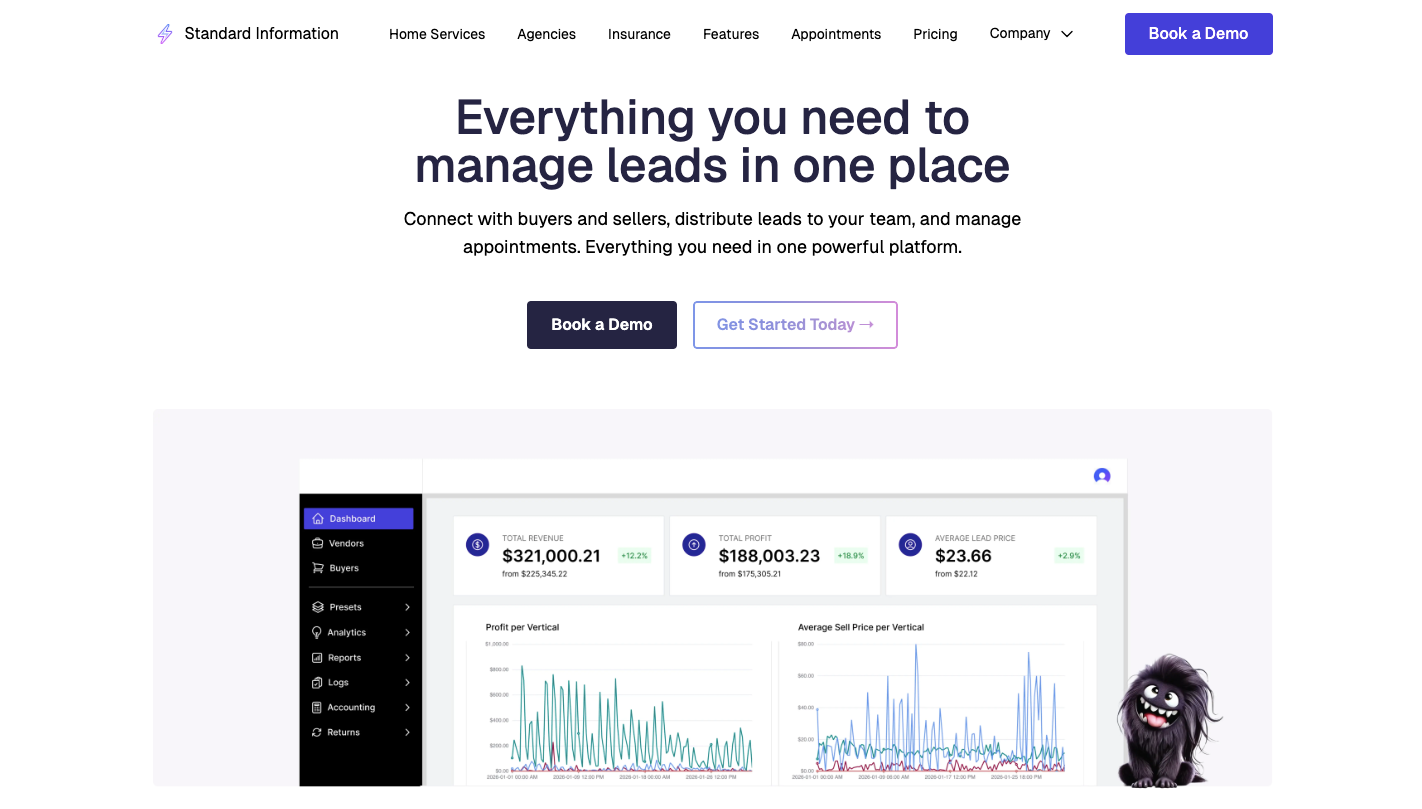
Once lead volume starts increasing, manual routing becomes difficult to manage. One homeowner’s request may need duplicate checks, phone validation, buyer matching, bid evaluation, and delivery within seconds.
Standard Information helps automate those steps from one platform built for the home service industry and other companies.
Route Leads Based on Buyer Rules
Standard Information lets operators build routing rules tied to:
- Geography
- Service category
- Schedules
- Buyer limits
A contractor can decide which locations, project types, or campaign hours they want before the lead enters the ping tree. It then routes homeowner requests automatically based on those conditions.
Validate and Filter Bad Data Before Delivery
Fake numbers and duplicate submissions create refund disputes quickly. Standard Information checks phone records, duplicate entries, and blacklist data before contractors receive the homeowner’s details.
You can block spam traffic, remove bad submissions, and improve the percentage of high-quality leads entering the marketplace.
Run Ping Post Auctions Automatically
It supports ping post workflows that send anonymous project details to multiple buyers before releasing the homeowner’s contact data. Buyers place bids based on their own pricing rules, then the system routes the lead to the winning match automatically.
Track Lead Activity in Real Time
Standard Information includes reporting tools that track:
- Routing activity
- Bid responses
- Validation checks
- Transaction logs
You can also review delivery activity, monitor buyer behavior, and identify routing problems before marketplace performance starts dropping.
FAQs About Home Service Lead Management
Why is home service lead management important?
Home service lead management helps marketplaces and home service contractors filter bad data, route leads faster, reduce refund disputes, and increase buyer trust. Strong systems improve response speed, protect lead quality, and support more effective lead generation services.
What is the ping post lead distribution?
Ping post lead distribution splits the transaction into two stages. First, the platform sends anonymous project details to buyers so they can place bids. After the winning buyer accepts the price, the system releases the homeowner’s contact data automatically.
How does lead enrichment improve lead quality?
Lead enrichment adds missing property, ownership, and demographic details to the homeowner request before routing starts. Buyers receive better information about the project, which improves matching accuracy and increases bidding confidence.
What metrics should businesses track in home service lead management?
Businesses should track lead response times, duplicate rates, buyer acceptance rates, routing speed, refund requests, bid values, and conversion rates. Those metrics help operators identify weak traffic sources, routing problems, and low-performing buyers quickly.