Many insurance agents focus on getting more leads. Few look at what happens after those leads come in. Delays, poor routing, and weak follow-up hurt insurance sales more than low traffic ever could.
When teams rely on manual steps or scattered tools, leads sit too long and lose value. A strong lead management strategy solves that by guiding every lead through a clear path.
In this guide, you’ll learn how insurance lead management works.
TL;DR
- Insurance lead management helps agencies capture, route, track, and follow up with leads until they become policyholders.
- Slow replies, bad data, duplicate records, and weak follow-up often cause leads to fail.
- Strong systems validate data, route leads instantly, and track performance in real time.
- Features like ping-post bidding, routing rules, and CRM integration help agencies respond faster and protect budget.
- Standard Information helps agencies manage lead flow, filter bad records, distribute leads, and monitor results from one platform.
Why Most Insurance Leads Fail to Convert
Many businesses struggle to stay competitive in the insurance industry because of:
Poor Lead Quality and Duplicates
Bad data wastes time and money. You are wasting your budget if you do not have high-quality leads.
Some entries contain fake names, wrong phone numbers, or people who only want to compare prices.
The same contact may appear more than once, especially when buying from more than one lead vendor. Agents then call the same person again, which causes confusion and lowers trust.
Low-quality data affects motivation. Sales teams stop trying when they are not given high-quality leads. Rejection increases, and response time slows down.
No Routing System in Place
Leads lose value when there is no system in place to control where they go next. A business fails when it lacks a system for organizing leads.
Some leads never get a response, while others go to the wrong person. A lead for a specific product may reach an agent who does not handle that type.
A routing system fixes that problem. It checks details like location, product type, and availability before sending the lead forward, which helps you find the right team members or buyers.
Lack of Follow-Up Automation
Closing a deal often takes more than one attempt. Many agents call once, then move on.
You need to contact leads within minutes, then follow up again if they do not respond. Many agents lose interest because they lack consistent follow-ups, which causes leads to go cold.
You can save hours every day by using automation tools that handle reminders and messages. Strong results depend on consistent outreach.
What Is Insurance Lead Management?
In the insurance context, lead management is a structured process to turn prospects into happy policyholders. Every step controls how leads move from the moment they enter your system until a deal closes.
Agencies, lead buyers, and marketplaces rely on this process to handle volume, protect data quality, and keep response times fast. An effective lead management process prevents people from falling through the cracks by guiding each lead through validation, routing, and follow-up in the right order.
The system manages the entire customer journey from start to finish, which keeps every lead active.
Enrichment further gives you deeper insights into your potential clients, so you can suggest the right insurance products. A complete setup supports your entire team by keeping lead flow organized and consistent.
How Insurance Lead Management Works
Insurance lead management follows a clear path. A lead comes in, the system checks it, adds more details, sends it to the right person or buyer, and then tracks what happens next to improve your day-to-day operations.
Capture Insurance Leads
The first step is automatic lead capture from every digital source. Most of your new business will start with web forms on your site, where users enter details like zip code, car model, or coverage type.
Other entry points work the same way. A landing page tied to a Facebook or Google ad collects a phone number or email.
A “Call Now” button, for instance, captures the caller ID and logs the call. Some teams also buy leads from a marketplace that sends data directly into the system through an API.
Each entry records key details right away:
- Where did they come from? Google search, Facebook ad, or a partner site.
- What do they want? Auto, home, or life.
You need such information because lead generation only works when you can capture leads before they move on.
Validate and Filter Lead Data
Once a lead enters the system, checks start immediately to protect data quality. The system looks at every part of the lead information before it reaches your team.
Phone and email checks run first. It verifies that a number connects to a real carrier and that the email has a valid format with an “@” symbol. After the initial syntax checks, it also validates more technical aspects, such as MX records, mailbox existence, and deliverability.
If someone enters fake details like “mickey@mouse.com” or a disconnected number, the system flags or blocks it.
Filtering rules help you control what enters your system. You can reject leads from certain locations or profiles that don’t fit your criteria. These checks reduce errors, remove the need for manual data entry, and lower operational costs.
Add More Data to Insurance Leads
A typical record includes name, phone number, and zip code. That’s not enough to run a strong conversation.
Enrichment tools take that small set of data and search other sources to find more details.
That extra context makes your approach more lead-based and focused. Clean storage also means you never lose contact details in a crowded inbox.
Additionally, you can run personalized outreach that matches the person’s situation. That same data helps you spot chances with existing clients, like offering bundled policies or upgrades at the right time.
Route Leads in Real Time
Routing starts the moment a person clicks “Submit.” The system reads the lead data and checks it against your rules right away. No one waits for a manager to open a spreadsheet or assign the lead manually.
This step powers modern insurance workflows. The system looks at:
- Zip code
- Product type
- Agent skill
- Availability
Then it sends the lead to the best match.
Fast routing is important for inbound leads. Even a few minutes' delay can cost the deal.
Distribution rules also help you manage high lead volume by sending leads based on capacity, location, or performance.
Distribute or Sell Leads
Lead distribution moves data to the next step in the pipeline. You can send leads from different lead sources to internal agents or external buyers.
Some businesses act as a “lead generator” that collects leads to sell to other insurance companies or agents in a marketplace. Others keep leads and send them to their own team.
Distribution delivers records straight to active sales reps. Before that happens, validation separates bad data from your most promising leads.
Not every prospect buys right away. Follow-up keeps your name fresh in their mind. Regular contact helps with nurturing leads until they’re ready to move forward.
Track Performance and Optimize
Every action gets tracked once the lead moves through the system. You need to watch your conversion metrics to understand what works and what doesn’t.
Tracking supports continuous improvement. If one source performs poorly, you can cut it.
These insights come from strong reporting tools. They show errors, response times, and deal outcomes in real time. Managers can also review team performance and make quick decisions based on real data.
What Makes a Strong Insurance Lead Management System
Your success depends on choosing the right lead management system.
Real-Time Lead Routing and Distribution
Many insurance agencies struggle because they use old data, shared spreadsheets, or slow handoffs.
Real-time routing means the lead lands with the right person in seconds, not after a manager checks an inbox. The system reads the lead’s zip code, coverage type, buyer rules, and agent status the moment someone clicks “Submit.”
Routing keeps sales teams productive and happy because each person gets leads they can actually handle. The best insurance agents want their data delivered fast, especially when a shopper still compares quotes online.
A strong setup can help rank leads based on their closing odds. For example, a home insurance lead with a valid phone number, matching zip code, and clear buying intent can go straight to a top closer.
Lower-fit records can move into nurture or a general queue.
Automated Lead Validation
Bad data should never reach an agent first. To avoid that, you get different checks:
- Phone checks confirm whether a number connects to a real carrier.
- Email checks look for valid formatting, active domains, and fake entries like “test@test.com.”
- Duplicate checks stop you from paying twice for the same person.
Prioritize your morning by using lead scoring. A score can rise when the lead has a working phone number, a strong location fit, and full form details. It can drop when the record has missing fields, fake contact info, or weak intent.
Automation removes heavy administrative tasks from your agents. Instead of fixing names, checking phone numbers, or cleaning records, they can focus on building relationships with real buyers.
Flexible Lead Distribution Rules
A strong system lets you control who gets each lead and why. You can set specific rules for each individual team member, such as product type, state license, schedule, language, or closing rate.
Your sales process needs to be as automated as possible because manual routing slows every step. The system can send more leads to top closers, pause delivery when someone reaches a daily cap, or reroute a hot lead after two minutes of no action.
Lead tracking supports the same flow. Managers can see who received each lead, when the call happened, and what result came next.
The system is built to convert prospects into buyers, and strong teams always follow lead management best practices to stay ahead.
Integration With CRM and Marketing Tools
Your leads should sync directly with your agency management system the moment a form, call, or vendor post comes in.
Integration creates a unified platform for all your data. A policy sale in your CRM can connect back to the ad, form, or vendor that produced the lead. That link shows whether Google Ads, Facebook, a partner site, or a marketplace produced real revenue.
You need seamless integration between your different sales tools because copy-and-paste work creates errors.
Real-Time Reporting and Insights
Reports show whether your lead system makes money or wastes budget. Insights give you a clear view of your current sales pipeline, including how many leads came in, who called them, how fast they responded, and how many became policies.
Strong reports can answer questions, such as:
- Did one source produce 100 leads but only 2 sales?
- Did another source bring 30 leads and 10 signed policies?
- Did Agent A call in two minutes while Agent B waited twenty?
Those details tell you where to change routing, budgets, and follow-up rules.
A unified platform helps everyone see the same numbers. You can review source quality, agent speed, buyer errors, rejected leads, and closed deals from one place.
Better data leads to better decisions because the team sees what happened today.
Maximize Every Insurance Lead With Standard Information
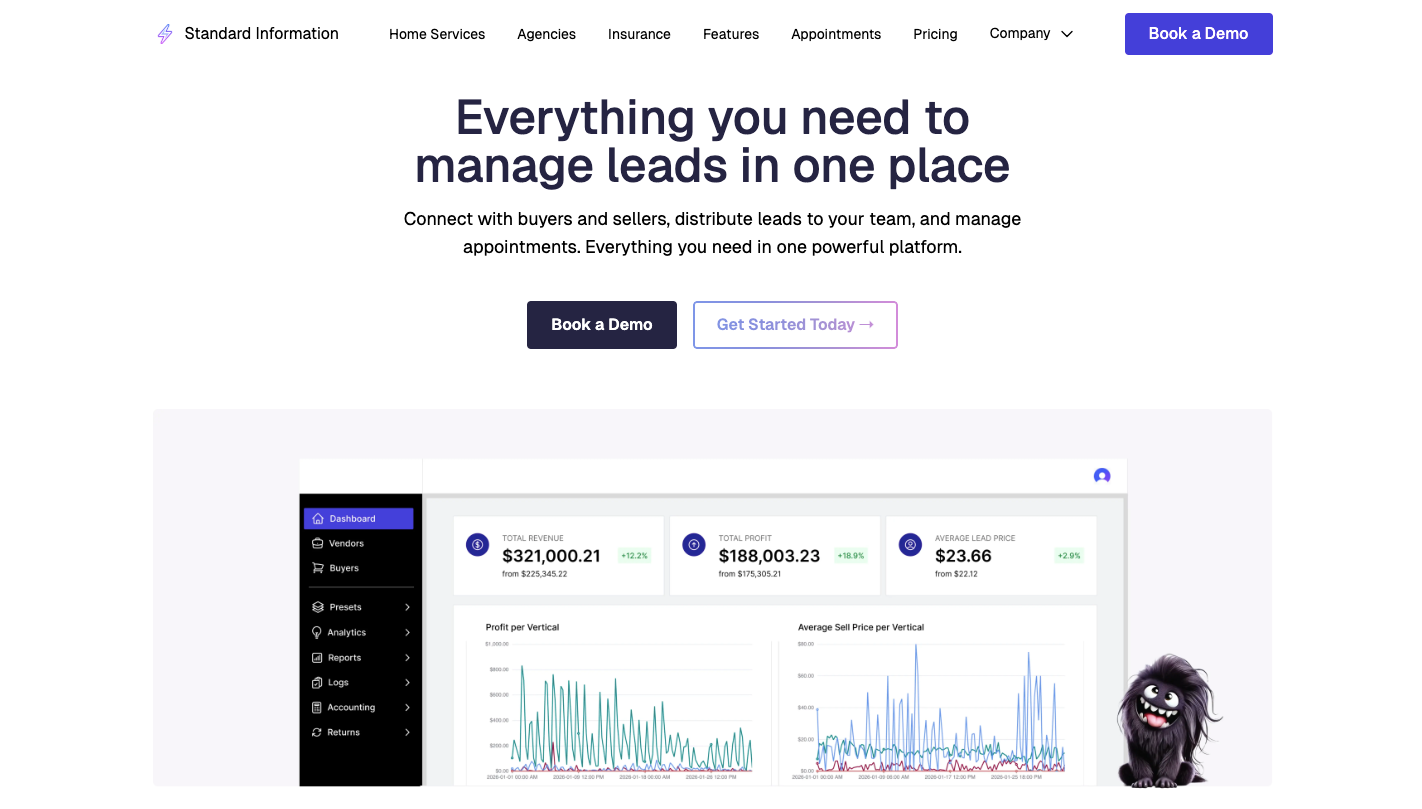
Standard Information gives you control over every step after a lead enters your system. A form fill, call, or vendor post should move through validation, routing, and delivery in seconds.
It gives you:
Real-Time Lead Routing With Custom Rules
Routing starts the moment a lead enters the system. The platform checks details like zip code, coverage type, buyer rules, and agent status, then sends the lead forward right away.
Custom rules control every step. You can route by geography, product, buyer capacity, or performance. A lead for “Auto Insurance in Texas” can go to a buyer who accepts that exact profile. A high-value lead can move to a top closer.
Fast routing protects response time and keeps leads active. It also helps your team avoid missed chances when volume increases.
Built-In Lead Validation and Filtering
Validation runs before any lead reaches your team. The system checks phone numbers, email formats, duplicate records, and fraud signals.
If someone enters a fake number or a test email, the platform flags or blocks it. Duplicate checks stop you from paying twice for the same contact.
You can even reject leads from certain locations, ages, or risk profiles. These rules help you focus only on qualified leads and avoid wasted spend.
Ping Post and Lead Monetization
Ping post lets you sell leads through real-time bidding. A seller sends partial data like age, location, and product type to multiple buyers.
Buyers review that “ping” and place bids based on their own rules. The highest bidder wins and receives the full lead.
This setup helps you earn more from each valid record. Instead of sending leads at a fixed price, you let buyers compete, which increases revenue for high-demand profiles.
Advanced Filters and Campaign Controls
Campaign controls give you full control over how leads move. You can set daily caps, weekly limits, and timing rules to match demand.
Blackout periods stop delivery during slow hours. Price settings define minimum and maximum values for each lead.
You can also control how long buyers have to respond to a ping. Shorter windows speed up the process, while longer ones allow more bids. These controls help you manage flow, pricing, and delivery with precision.
No-Code Buyer Integration Builder
Connecting buyers usually requires technical work. Standard Information removes that barrier with a no-code builder.
You can map fields, define how a buyer responds to pings and posts, and test everything before going live. For example, you can match “First Name” to a buyer’s required field or set custom headers for security.
Testing helps catch errors early. A broken field or missing value can stop a sale, so this step keeps everything running smoothly once traffic starts.
Real-Time Reporting and Performance Tracking
Reports show what happens after a lead moves through the system. You can track where the lead came from, which buyer received it, and how it performed.
Dashboards display key metrics like accepted leads, rejected posts, and errors. Logs show exact details for each transaction, which helps you fix issues quickly.
Performance tracking helps you adjust your strategy. You can cut poor sources, increase volume for top buyers, and improve routing rules based on real results.
FAQs About Insurance Lead Management
What is insurance lead management?
Insurance lead management is the process of capturing, validating, routing, tracking, and following up with leads until they become policyholders. A strong system helps agencies respond faster, organize data, and manage every stage of the sales cycle.
How do insurance businesses manage leads?
Insurance businesses manage leads through forms, calls, CRM systems, routing rules, validation tools, and automated follow-up. Many teams also use platforms that handle lead distribution, buyer routing, ping-post auctions, and reporting from one dashboard.
What is the best insurance lead management system?
The best insurance lead management system depends on your business model, lead volume, and routing needs. Platforms like Standard Information work well for agencies, lead buyers, and marketplaces that need real-time routing, lead validation, ping post bidding, campaign controls, and reporting.
How can I improve insurance lead conversion rates?
Improve conversion rates by responding faster, validating lead data, routing leads to the right agent, and following up consistently. Better filtering, real-time alerts, and automated workflows also help teams close more deals from the same lead volume.