Ever spend ten minutes reviewing a lead only to realize the contact never matched your offer in the first place? Maybe the company operates in the wrong industry, or the contact downloaded a form just to compare vendors.
Lead marketplaces that rely on ping post auctions face this problem every day. When platforms push submissions into auctions without strong checks, buyers receive contacts that never fit their targeting rules.
In this article, you’ll learn how to use a lead qualification checklist to verify incoming leads before they reach buyers.
Send only verified leads into your ping post auctions. Create your Standard Information account!
TL;DR
- A lead qualification checklist helps verify whether incoming leads are high-quality before they reach buyers, improving lead quality and preventing wasted outreach.
- Key validation steps include checking phone reachability, email deliverability, and accurate geographic/demographic data to make sure the lead is real and serviceable.
- Systems should also perform IP and location confirmation, duplicate detection, and compliance checks.
- Lead scoring and sorting prioritize high-intent prospects and route them to the right buyers, campaigns, or sales teams before auction exposure.
- Standard Information automates this process by validating, scoring, deduplicating, and routing leads so only qualified opportunities enter ping post auctions.
What Makes a Lead High Quality?
These signals help identify promising leads that buyers are willing to pursue:
Valid Phone Numbers
A valid phone number forms the foundation of a marketing-qualified lead (MQL).
First, the number should follow the E.164 international standard (+[Country Code][Subscriber Number]), which defines the correct structure for country codes and digits. Once the number contains missing digits or an invalid area code, it fails validation immediately.
Reachability determines whether the number has real value. A phone flagged as disconnected or “temporarily out of service” indicates the buyer will never reach the person. Buyers in a ping post auction avoid bidding on those contacts.
Deliverable Email Addresses
A high-quality lead includes an email address that can actually receive messages. An address that simply looks valid, such as “name@gmail.com,” doesn’t prove the mailbox exists.
Simple Mail Transfer Protocol (SMTP) verification confirms mailbox existence by communicating with the receiving mail server. If the server responds with “User Unknown,” the lead fails validation immediately. A strong lead shows a deliverable status confirmed through that server response.
Correct Geographic and Demographic Data
Accurate location information shows whether the buyer can actually serve the lead. In ping post marketplaces, many industries operate only within specific zip codes or metropolitan areas.
A high-quality lead includes a valid zip code that matches the city and state entered in the form. Verification tools confirm that those values align with official postal records.
Demographic details further strengthen lead quality. In home improvement campaigns such as solar installation, buyers often require confirmation that the person owns the property and lives in a single-family residence.
Those attributes help identify potential customers who can actually purchase the service.
Lead Qualification Checklist for Ping Post Systems
Use this qualification checklist before any ping auction begins so every lead entering your marketplace supports a cleaner routing flow and ultimately transforms your sales process into a system that prioritizes verified opportunities.
1. Contact Data Validation
Contact verification decides whether a lead should move forward. If phone, email, or identity checks fail during the milliseconds between the ping preview and the post-sale, the submission becomes dead weight.
Phone reachability should be verified first. A silent carrier check confirms whether the device is active and connected to a network tower. Reject numbers flagged as inactive or suspended before buyers see them.
Buyers route leads differently:
- Mobile
- Landline
- VoIP
- Toll-free
Mobile numbers usually receive higher bids since they support SMS communication. Sending a landline into a text-driven campaign often causes failed delivery and refund requests (you don’t want that).
Disposable emails or burner numbers often appear during lead generation, so run every inbound lead through a real-time SMTP and home location register (HLR) check to make sure high-quality leads enter the system.
Some teams also review the lead’s job title to confirm professional identity before labeling the contact “qualified.”
2. Location and IP Confirmation
Reliable contact details don’t guarantee the buyer can serve the lead. Geographic validation confirms whether the opportunity belongs in the correct service region.
Every zip code should exist and match the submitted city and state. Once confirmed, the system converts the zip into latitude and longitude coordinates so the distance between the lead and buyer territory can be measured.
The next step compares that location with the visitor’s IP address. When both points align, the lead likely comes from the correct region.
IP-to-geo validation helps disqualify leads outside the correct region. That check confirms the person belongs to the intended target audience, which allows your marketing outreach to address real customer pain points.
3. Duplicate Submission Detection
Even when contact and location checks pass, duplicates can still damage your marketplace. Not every lead entering the system represents a new opportunity.
Phone numbers provide the fastest duplicate signal. Each submission should be compared against historical records before entering the auction. Most systems define a deduplication window between 30 and 90 days.
Duplicate filtering protects your sales pipeline, keeps the sales funnel organized, and helps with prioritizing leads that represent genuine opportunities.
4. Consent and Compliance Confirmation
When the permission to contact the person cannot be proven, the lead becomes legally unusable.
Look first at how the opt-in happened. A pre-checked box counts as a compliance failure. The person should manually click a checkbox or press a clearly labeled “Submit” button placed directly under the disclosure text.
Right after submission, record the timestamp. If someone later claims they never signed up, that timestamp becomes your first defense during an audit. It shows when the request entered the decision-making process.
Further confirm whether the contact holds decision-making or buying authority, so your outreach reaches the ultimate decision-maker rather than someone who can’t approve the purchase.
5. Lead Quality Scoring
Once validation and compliance checks pass, the next question becomes simple: How valuable is this lead?
A structured lead-scoring process answers that question. Start by defining the qualification criteria that signal stronger buying intent.
Typical scoring signals include:
- Verified consent documentation
- Accurate geographic match
- Reliable phone and email
These inputs feed your lead-scoring model, which allows the system to rank leads based on conversion potential.
Budget information can strengthen the score. If the form captures spending ability, adjust the value using the lead’s budget field.
Those scores influence auction placement. High-scoring qualified prospects, such as a verified decision-maker with no budget constraints, usually enter exclusive auctions where buyers compete with stronger bids.
Scoring also aligns with buyer decision criteria, which helps your system determine which leads deserve priority exposure.
6. Lead Sorting Before Buyer Exposure
Sorting determines where that lead should go before any buyer sees the ping preview. It normally produces three outcomes:
- Name, phone, and email align completely
- Phone is valid, but the identity is incomplete
- Phone disconnected or unreachable
A full match routes the lead to premium buyers. Meanwhile, partial identity moves the lead into shared auctions. Invalid contact information is then removed before exposure.
Geographic alignment follows next. Buyers usually operate within defined territories. Leads located within those territories route to regional campaigns, while broader leads move toward national buyers.
Through sorting, you can determine how leads move within internal workflows, too. Some opportunities go directly to sales reps, while others require review before becoming a sales-accepted lead.
Operational routing may depend on urgency within deal stages or the timing of expected purchasing decisions. Matching the lead to the correct sales model helps each buyer focus their sales efforts on opportunities that fit their pipeline.
7. Buyer Targeting Alignment
Even strong leads lose value when the buyer targeting rules do not match the submission. For example, you can’t send a life insurance inquiry to a health insurance campaign unless the person has agreed to both.
Geographic targeting follows the same logic. Many buyers operate within specific service areas. Sending leads outside those areas wastes time and quickly damages buyer trust.
Coordination between sales and marketing teams confirms that the lead matches the intended customer profile. When targeting aligns correctly, buyers receive leads that match their campaigns.
How Standard Information Controls Lead Quality
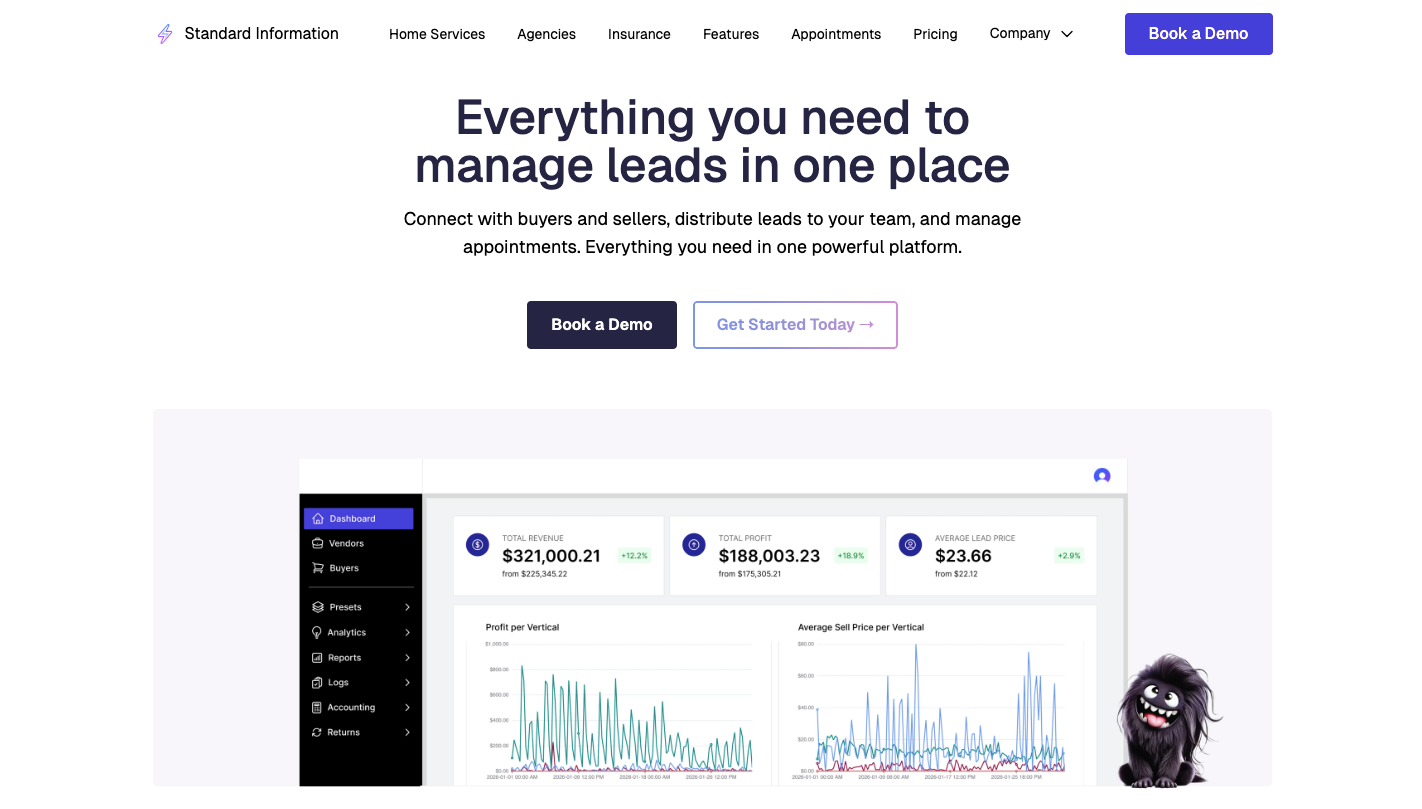
Anyone who buys or sells leads will tell you the same thing: Lead quality determines whether a marketplace survives.
A solid lead qualification process keeps your marketplace healthy because buyers continue bidding when they trust the lead data they receive.
Standard Information is a lead distribution platform that focuses on controlling lead quality before a lead ever reaches the auction. Every submission goes through validation, scoring, and sorting, so your marketplace only exposes leads that match buyer demand.
Here’s how exactly it guarantees you always have high-quality leads:
Duplicate Detection
Duplicate submissions quietly destroy buyer confidence.
Someone may submit several forms in a short period, sometimes through different campaigns or publishers. When the same contact reaches buyers multiple times, they quickly lose trust in the marketplace.
Standard Information checks duplicates on your entire system, not just within one campaign. Phone numbers, email addresses, and other identifiers are compared against previous submissions before the lead reaches buyers.
As the system detects the same contact data from another source or campaign, the duplicate is blocked.
Removing duplicates before the auction protects buyers from wasted calls and keeps conversion performance stable.
Quality Score Assignment
Once validation checks pass, Standard Information assigns a quality score that reflects whether the lead appears trustworthy and whether it meets the campaign requirements.
Scoring helps the marketplace determine how valuable the lead might be before routing begins. Higher scores indicate stronger opportunities, while lower scores signal weaker intent or incomplete information.
That lets you automate lead scoring, which helps buyers focus on opportunities with stronger conversion potential rather than contacts that create longer sales cycles.
Sorting Rules Based on Location Source Time
Standard Information allows sorting based on signals such as geographic location, traffic source, and time of submission.
Location rules ensure the lead appears only in auctions where buyers operate within the same service area. A solar installer working in one region should never receive leads from another region. Sorting by location prevents that mismatch.
Traffic source also influences routing decisions. Some publishers generate stronger leads than others. When the system identifies reliable sources, it can route those leads toward premium buyers.
For time-based sorting, buyers often want leads during specific hours or when their call teams are active. Matching lead delivery with buyer availability helps sales call conversations happen quickly while interest remains high, especially when campaigns involve multiple stakeholders.
Qualify Sales Leads With Confidence Using Standard Information
Running a lead marketplace becomes easier once you start qualifying leads with tools that verify data before buyers ever see it. Standard Information provides an automated lead qualification framework that validates, scores, and routes leads so only reliable opportunities move forward.
It checks phone numbers, email addresses, location data, and duplicate submissions the moment a lead enters the system. When something fails, the lead is blocked before the auction begins, which protects buyers from weak submissions and keeps bidding activity strong.
Once a lead passes validation, the system can enrich the data through integrated apps and assign routing rules based on geography, lead score, or buyer capacity. That information helps buyers understand where the lead fits within their buying process.
Leads then move to the correct buyer or team through real-time ping post routing. Hence, your sales operations can focus on prospects that match campaign requirements.
Control lead quality before the auction even begins. Start using Standard Information today!
FAQs About Lead Qualification Checklist
What is a lead qualifying question?
A lead-qualifying question helps determine whether a prospect is a good fit for the offer before the conversation moves forward. The question usually explores budget, need, location, timeline, or authority, so marketing and sales teams can understand if the contact belongs in the pipeline.
In practice, the question helps reveal where the person stands in the decision process and whether the lead should move forward or be filtered out.
How can you tell if it is an unqualified lead?
An unqualified lead usually fails basic checks. The contact information may not work, the location may fall outside the service area, or the person may show no intent to buy.
Another signal appears when the contact lacks the authority to approve the purchase, which means the lead cannot move through the sales organization without additional decision-makers.
What is the difference between sales qualified leads and product qualified leads?
Sales-qualified leads show clear buying intent and are ready for direct outreach from a sales team. Product-qualified leads reach that stage after interacting with the product itself, such as using a trial or demo, which signals strong interest before a sales conversation begins.
How do you check lead quality?
Lead-quality checks begin with validating contact data such as phone numbers and email addresses. The process then verifies location accuracy, duplicate submissions, and consent records.
These checks confirm that the lead is reachable, legitimate, and aligned with buyer requirements before entering the sales pipeline.