Plenty of companies spend thousands on lead-generation campaigns, only to lose potential customers before the lead ever reaches the right buyer.
But through lead management, you can do instant routing, lead scoring, fraud checks, buyer rules, and automated lead nurturing.
In this article, you’ll learn how the lead management process works and how platforms like Standard Information help businesses convert leads faster.
TL;DR
- A lead management process organizes lead capture, validation, scoring, routing, and follow-up within a single system.
- Modern platforms automate lead capture, qualification, routing, and distribution in real time.
- Fast validation, smart routing, and quick follow-ups help businesses improve conversion rates.
- Companies use routing software, validation tools, and ping post platforms to manage lead flow.
- Standard Information helps businesses automate lead routing, validation, bidding, reporting, and compliance in a single platform.
What Is a Lead Management Process?
A lead management process starts when lead data enters the platform from sources such as web forms, paid advertising campaigns, affiliate partners, lead vendors, marketplaces, or inbound calls.
Validation comes next because poor-quality data reduces lead value and creates problems during distribution. The platform verifies contact details, removes duplicate submissions, checks compliance requirements, and filters fraudulent records before the lead enters routing or auction workflows.
Once the platform confirms the data is valid, scoring helps identify which records match buyer requirements, quality thresholds, and distribution rules.
A successful lead management process uses automation to validate, qualify, route, and distribute lead data quickly while maximizing its value before a buyer receives the record.
How the Lead Management Process Works
For instance, the lead management process starts with:
Ingestion and Structural Normalization
Before a platform can validate or route records, it needs clean and consistent data.
Lead sources often use different field names, phone formats, and submission structures. Companies that generate leads from multiple channels usually build unified API entry points to capture all leads through a single gateway.
The lead process starts by converting raw submissions into a standard format. Phone numbers, zip codes, email addresses, and state names follow the same structure regardless of where the record originated.
Standardized JSON schemas help platforms securely process inbound leads while keeping data consistent.
Source tracking happens immediately after arrival. Campaign IDs, vendor details, timestamps, and traffic sources get attached to records the exact moment they enter the system as leads. Those tags help reporting later and strip formatting errors instantly to avoid dropping any potential leads.
Lead Validation and Fraud Prevention
After capture finishes, the platform checks if the contact details belong to a real person.
Validation tools inspect email activity, phone carrier status, IP locations, and browser behavior within seconds. Duplicate scans compare new records against older submissions to stop repeated contacts from entering the pipeline twice.
Blacklist filters, on the other hand, reject phone numbers associated with spam complaints, lawsuits, or Do Not Call lists.
The system uses filters to block unqualified leads and bot traffic before they reach sales teams.
Ping Post Lead Auctions
Ping post auctions sell leads through real-time bidding. Rather than sending the record directly to one buyer, the platform opens a fast auction between companies interested in that lead type.
First, buyers receive partial details such as zip code, homeowner status, or service interest. Private contact details stay hidden during this stage. Buyers then place bids automatically based on territory, budget, or targeting rules.
Sellers use this tech to get the best price for high-value leads in an open market. One buyer may pay more for leads from specific cities while another targets certain income levels or service categories.
After bidding closes, the platform delivers the full record to the winner instantly. Auctions deliver hot leads to the highest bidder while the person is still on the website.
Routing Logic and Distribution
Lead distribution often starts with eligibility checks. Geographic location, age, income range, or service requirements help determine which buyers can receive the record.
If the first buyer rejects it, dynamic waterfall chains pass the lead to the next approved destination automatically.
Companies can automatically assign leads to the right buying endpoints through cap rules and contract settings. Ping post platforms take a different approach. Buyers receive anonymized profiles first, then place bids before any personal details leave the platform.
Shared and exclusive delivery options support different business models. Those matching rules help route interested prospects to active buyer networks while delivering warm leads to companies ready to respond quickly.
Financial Reconciliation and Feedback Loop
Lead delivery marks the beginning of another review stage. Buyers may reject records due to duplicate submissions, disconnected numbers, or incorrect details.
Rejection logs track those disputes and help improve the data audit capabilities of your lead management system. Approved claims can trigger refunds or vendor chargebacks based on contract rules and return windows.
Valuable leads often produce stronger returns, while poor-quality sources create losses through refunds and disputes.
Reporting tracks buyer acceptance rates, return volumes, source quality, and routing performance. Those insights help you identify low-performing traffic sources, adjust distribution rules, and improve lead profitability.
Lead Management Process Best Practices
To improve your lead management process, you need to:
Build an API-First Infrastructure
Manual uploads and spreadsheets create delays that reduce lead value before buyers even see the record. A strong lead management strategy starts with API-based data transfers that move information between vendors, validation services, and buyers in real time.
Standardized schema layouts help marketing and sales teams receive clean data regardless of where the record originated. Direct webhook connections also help an external marketing team monitor traffic quality and source performance.
Scalable API networks support different lead generation strategies from forms, calls, affiliates, and marketplaces through a single framework. Faster synchronization improves visibility into traffic quality and helps maximize the return on lead generation efforts.
Validate Quality and Block Fraud Instantly
Bad data becomes expensive when it reaches buyers. An effective lead management strategy focuses on identifying problems before records enter an auction or distribution queue.
Phone verification can confirm active carrier status, while email validation checks mailbox quality and domain legitimacy. Those checks support effective lead management by removing records that have little chance of producing value.
Fraud protection should go further than contact verification. Not all leads come from real people. Bots, proxies, VPNs, and automated submissions often create fake traffic that inflates volume and increases return rates.
Run a Tight Ping-Post Auction
During the ping phase, buyers review limited information before deciding whether to bid on sales-qualified leads.
Clean post-deliveries help buyers nurture leads immediately after purchase. Complete records should move directly into the systems used by your sales team members and modern sales enablement tools.
Matching records against buyer requirements helps consumers receive relevant content from companies that fit their needs. Quick delivery gives buyers more time to turn leads into paying customers before interest fades.
Monitor Buyer Performance Continuously
Buyer performance changes over time, which means routing decisions should change too. Some buyers respond within minutes, while others let leads sit untouched for hours.
Conversion tracking helps businesses compare buyers, vendors, and campaigns. Tracking which buyers turn the most people into paying customers helps you optimize your profit and improve future routing decisions.
Return rates reveal another warning sign. Buyers who constantly reject leads may have poor sales processes or unrealistic expectations. Revenue-per-lead reporting helps sellers understand which partnerships create the strongest long-term value.
Use Real-Time Reporting Dashboards
Live dashboards help teams spot problems before lead volume drops. Real-time activity feeds show what enters the system, what gets routed, and which campaigns create the best results.
Key metrics to monitor include:
- Response speed
- Conversion rate
- Return percentage
- Source quality
Dashboards also let you compare campaign quality between paid ads, affiliates, inbound calls, or marketplace traffic.
Integrate Lead Systems With APIs and CRMs
Disconnected tools create reporting gaps and duplicate records. API integrations move data instantly between lead platforms, customer relationship management (CRM) systems, dialers, and reporting systems after capture finishes.
Real-time syncing keeps records updated for both teams. Automated lead tracking works best when all your systems are connected via APIs since every status update moves between platforms automatically.
Field mapping keeps records organized during transfers. One system may label a field as “mobile number” while another calls it “primary phone.” Integration rules place the data into the correct location before the sales team opens the record.
Connected systems help sales and marketing teams stay aligned regarding lead status and routing updates.
Lead Management Process Tools You Can Use
Most companies rely on several platforms together to capture, route, validate, store, and analyze leads from the first click to the final sale.
Lead Routing Software
Routing platforms control how lead data moves through buyer networks after validation. The system checks buyer filters, location requirements, budget limits, and delivery caps before selecting the best destination.
Waterfall routing, Ping post auctions, and exclusive distribution models each serve a different purpose. A lead manager can configure those rules to maximize revenue, improve acceptance rates, and maintain buyer quality standards.
The right platform helps businesses handle more leads while improving distribution performance and lead value.
Ping Post Platforms
Ping post systems run real-time lead auctions between buyers interested in the same lead type. First, the platform sends partial details such as zip code, service category, or homeowner status while keeping personal information hidden.
Buyers review the preview and place bids automatically through APIs. After bidding closes, the platform delivers the full contact record to the winning buyer within seconds.
Many lead marketplaces depend on this setup since pricing changes constantly based on demand, geography, or lead quality. Some platforms support shared lead sales while others only allow exclusive delivery.
The best lead management software for marketplaces usually includes a ping post engine built for real-time bidding and automated delivery.
Lead Validation Tools
Validation platforms inspect lead quality before records enter the sales pipeline. Email checks confirm mailbox activity while phone validation tools inspect carrier status, line type, and connection history.
Duplicate scans compare new submissions against older records to stop repeated contacts from entering the system twice. Fraud detection tools inspect IP addresses, browser behavior, and unusual traffic patterns to catch fake submissions created by bots.
These tools help you track leads and verify their identity before they enter the system, reducing wasted calls, refund requests, and low-quality traffic.
Improve Lead Flow and Routing With Standard Information
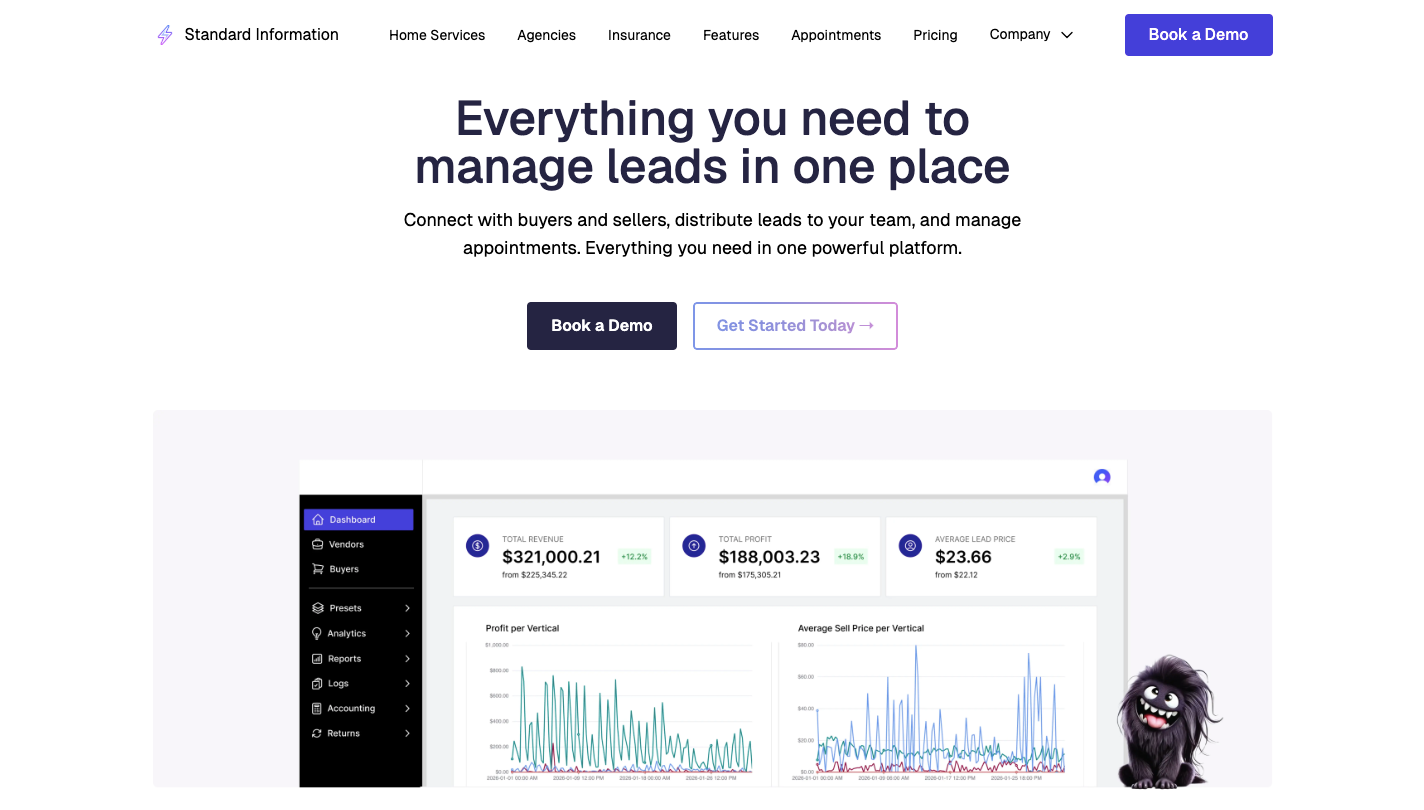
Standard Information gives you an all-in-one lead management tool to capture, validate, route, distribute, and monitor leads in real time. Companies can manage leads from paid ads, vendors, affiliate traffic, inbound calls, and marketplace partners.
Real-Time Lead Routing and Distribution
Routing rules push leads to the right buyer within seconds after qualification finishes. You can distribute leads based on geography, score, availability, service category, or campaign rules.
Fast delivery helps teams reach leads before competitors do.
Ping Post Auction Management
Ping post tools open live bidding between buyers before the platform delivers the full lead record. Buyers receive partial details first, then place bids automatically through APIs.
Sellers can increase lead value by letting buyers compete in real time for the same opportunity.
No-Code Buyer Integrations
Standard Information includes a no-code integration builder that quickly connects buyers via APIs, webhooks, and field-mapping tools. You can test integrations before launch, customize buyer responses, and control how lead data moves between systems.
Advanced Campaign Filtering
Campaign filters help businesses control where leads go and when routing happens. For instance, you can block certain ZIP codes, limit delivery times, set volume caps, and create pricing rules tied to lead quality or buyer demand.
Buyer Campaign and Bidding Controls
Buyer controls help teams manage budgets, lead caps, and bid settings from one dashboard. Companies can limit how many leads buyers receive each day while adjusting bid rules based on conversion rates or campaign goals.
TCPA Compliance Support
Compliance tools inspect leads against Do Not Call lists, opt-out databases, and restricted records before routing begins. Secure delivery settings help you protect customer information while keeping marketplace activity compliant.
FAQs About the Lead Management Process
What is a lead management process?
A lead management process tracks and organizes every step after a person shows interest in your business, from capture and validation to routing, follow-up, and conversion.
What are the stages of the lead management process?
The main stages include lead routing and distribution, ping post auction, integration, campaign filtering, and bidding controls.
Why is lead management important?
Lead management helps businesses respond faster, reduce bad data, improve follow-ups, and move more qualified leads through the sales funnel before competitors reach them.
What tools help automate lead management?
Businesses use lead management software, CRMs, routing platforms, validation tools, reporting dashboards, and ping post systems to automate lead handling and distribution.