Let’s say a lead comes in from Facebook at 2:03 PM. It’s from Texas, interested in auto insurance, and your top buyer for that state just hit their daily cap.
What happens now? Does the system instantly reroute it to the next highest-paying buyer? Or does it sit there for a few seconds too long while revenue quietly slips away?
When you’re managing this kind of logic across thousands of leads per day, you need the best lead management system.
In this article, we compare the top six platforms to help you choose the right lead management software for your needs.
TL;DR
Here are the six best lead management systems in 2026:
- Standard Information - Best for high-volume lead routing and real-time distribution
- LeadProsper - Best for affordable real-time lead routing
- LeadsPedia - Best for affiliate and performance network management
- LeadByte - Best for automated lead nurturing and validation
- Phonexa - Best for multi-channel lead distribution and call-tree auctions
- LeanData - Best for complex lead-to-account matching
- LeadAngel - Best for lead distribution and data cleaning
Common Problems a Sales Lead Management Platform Solves
These are the common problems you can encounter when you don’t have a structured management system:
High Volumes of Invalid Data
When no strict filter exists at the entry point, low-quality records flow in as if they were real opportunities. You end up paying lead providers or affiliates for “Mickey Mouse” names, disconnected phone numbers, and disposable email addresses that will never respond.
On a spreadsheet, lead generation looks strong. In practice, a large portion of that volume can’t be converted.
When a sales rep dials five “invalid numbers” or “wrong person” contacts in a row, frustration builds. By the time they finally speak to a real prospect, their tone shifts, which makes it harder to nurture leads.
Unsold Leads
Using a simple one-to-one routing model means sending a lead to a single buyer or internal team and hoping they accept it. If they reject it or pause intake, the opportunity has nowhere else to go.
When a buyer reviews full details and declines the record, you have already spent the data. You can’t easily pull it back and offer it elsewhere.
Time makes the situation worse. Without real-time processing, unsold leads often remain in a CSV file or inbox while someone looks for another outlet. During that delay, promising leads cool off and potential customers move on.
As lead engagement drops, sales effectiveness suffers, and recovery becomes harder.
Duplicate or Bad Data
Dirty records waste your time and damage your credibility. For example, three of your sales representatives may call the same person on the same day. From the buyer’s perspective, it feels disorganized.
Manual entry further leads to typos, missing numbers, and fake submissions such as “asdf@gmail.com.” Then, you spend hours dialing unreachable contacts.
Lead management software helps block duplicates and verify prospect data before it reaches your team. That protection supports actionable insights about which sources produce reliable results.
No Visibility Into ROI
Is low performance caused by weak traffic or poor follow-ups?
Without stage tracking, you can’t measure drop-off points in the sales funnel.
Among marketing and sales teams that want to maximize ROI, structured systems improve sales performance and help boost conversion rates by connecting spend to measurable outcomes.
6 Best Lead Management Tools in 2026
Below are the six best lead management platforms for different use cases.
1. Standard Information: Best for High-Volume Lead Routing and Real-Time Distribution
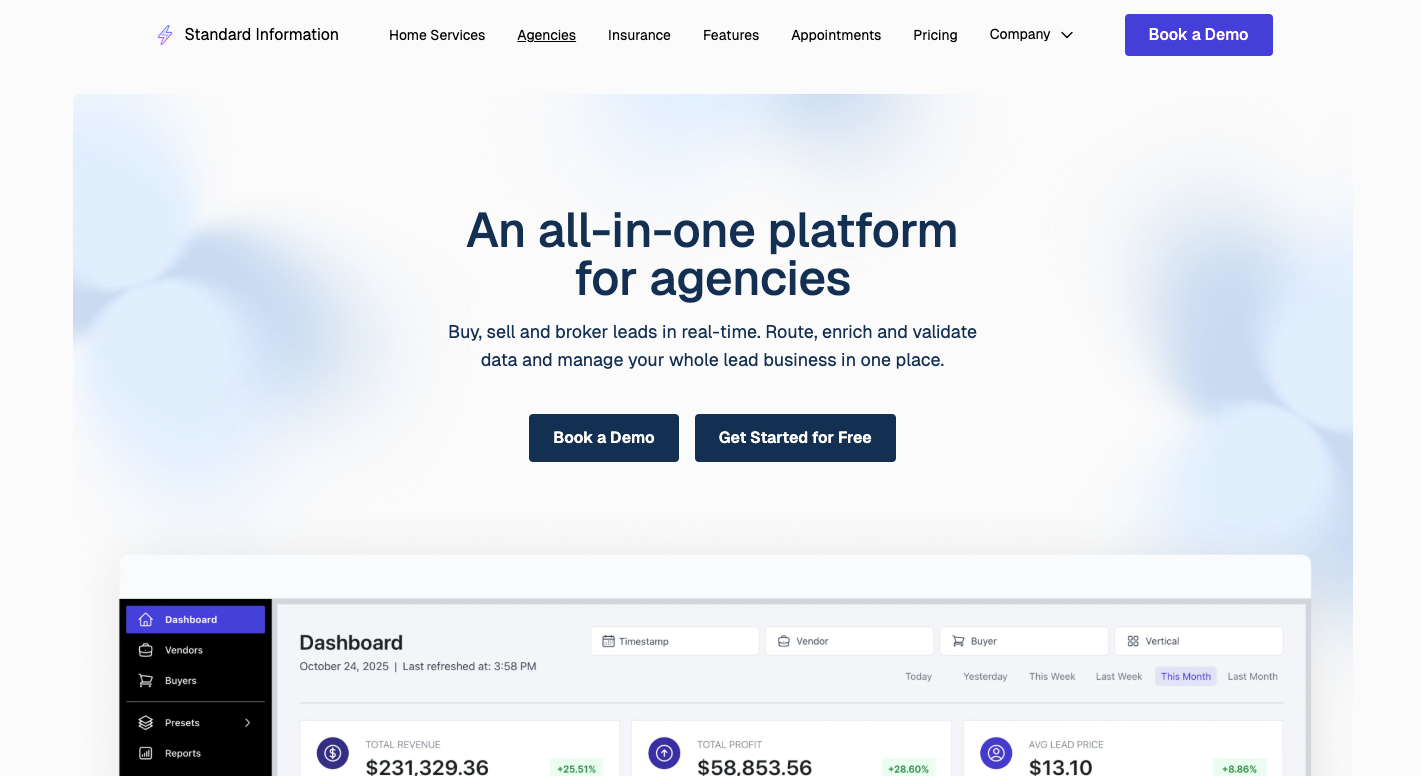
Standard Information is a lead auction and distribution platform for companies that operate in high-volume environments.
It can ping multiple buyers at the same time using partial data once a lead enters your system. Buyers review filters and budgets, then bid on new leads in real time. The system then posts the record to the winning buyer instantly.
Before any post happens, the platform runs duplicate checks, blacklist scans, suppression matching, and compliance validation. Through the App Store, you can enhance leads with additional data from third-party tools such as phone verification or enrichment services.
Key Features
- Ping post auctions - Pings multiple buyers simultaneously, collects bids, and routes the full record to the highest qualified bidder within seconds.
- Lead buying and selling controls - Allows users to purchase traffic from vendors or sell leads using pricing logic, margin settings, and flexible campaign rules.
- Advanced filters and blacklists - Blocks duplicates, filters litigation lists, rejects profanity entries, and prevents unwanted submissions before delivery.
- App Store integrations - Connects with verification and enrichment services so you can enhance leads with additional data from third-party tools before routing.
- No-code integration builder - Maps custom fields to customer relationship management (CRM) software like Salesforce or other external systems, supporting seamless integration without developer work.
- Reporting and transaction logs - Displays ping results, post outcomes, margin tracking, and system errors so operators see exactly how all the leads perform.
- Budget caps and scheduling - Sets daily, weekly, or monthly volume limits and timing rules to control distribution flow precisely.
- AI call center and appointment routing - Supports automated appointment distribution and live calendar routing for high-volume inbound traffic.
2. LeadsPedia: Best for Affiliate and Performance Network Management
Source: leadspedia.com
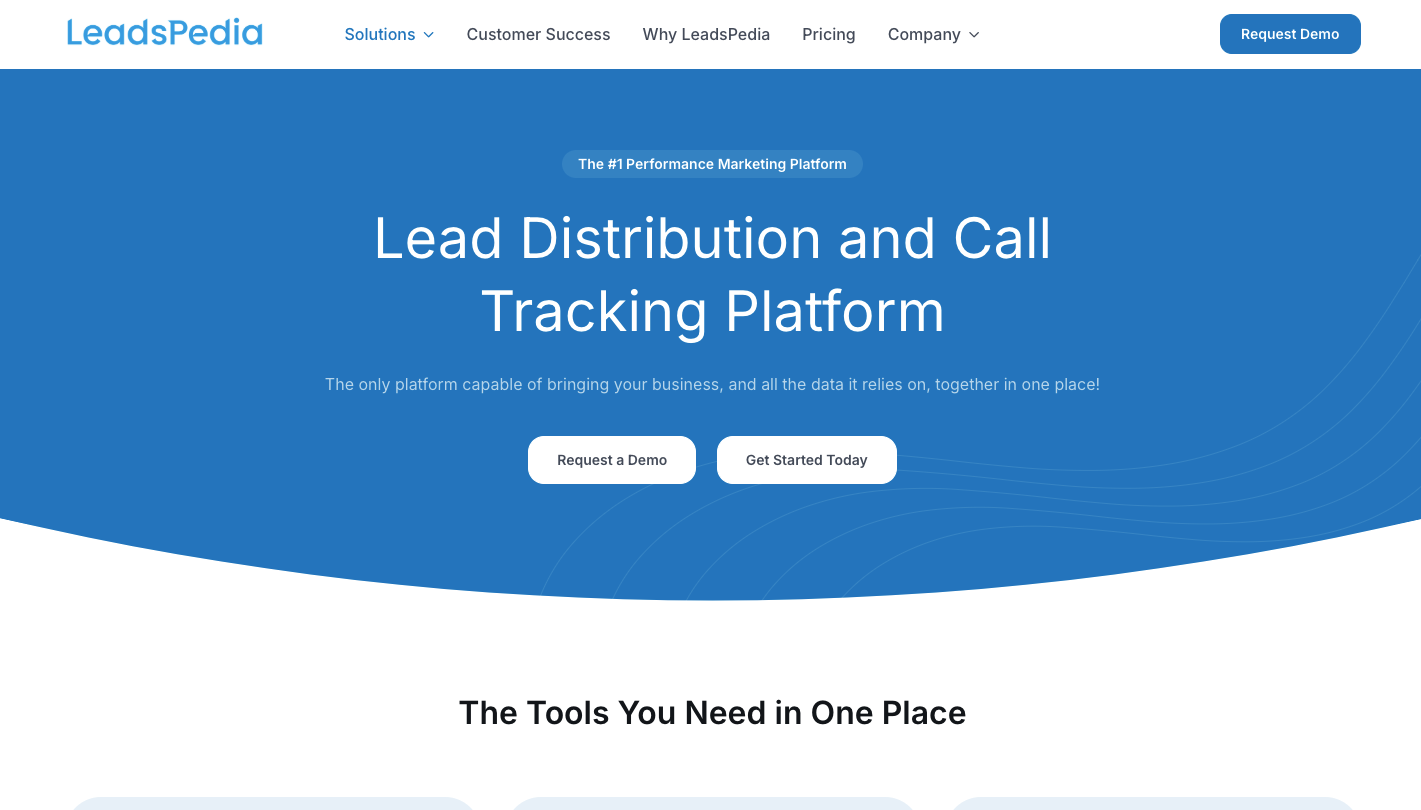
LeadsPedia is a lead distribution and performance marketing platform. Compared to traditional sales lead management software that focuses on long sales conversations, this system focuses on moving data between affiliates and buyers in real time.
When a lead hits the system, LeadsPedia uses ping post technology. It pings potential buyers with partial data, such as a zip code or credit range, to see who wants to buy it.
Once a buyer responds with the best bid, it posts the complete lead details instantly. That process happens in milliseconds.
Before a lead is ever sent to a buyer, the platform runs it through scrubbing services. It checks if the phone number is active, if the email looks like a trap, and whether that person has already sold to the same buyer.
You define what you sell, such as home insurance or solar leads, and choose the fields you require. Then you enter buyers, set their filters, and monitor margins through the real-time dashboard.
Key Features
- Ping post distribution - Uses a ping post system that sends partial data to buyers, collects bids, and delivers the record to the highest bidder in seconds. You can create waterfall rules or weight-based splits to control how traffic flows.
- Built-in scrubbing and validation - Checks phone activity, email format, and prior sales history before delivery so buyers receive verified data.
- Buyer filters and controls - Let you enter buyers and define filters such as location, credit score, or volume caps before routing traffic.
- Unified dashboard for forms and calls - Provides a single view where you track web forms and inbound calls together. The system records call duration so billing reflects sales opportunities.
- Automated invoicing - Calculates what each buyer owes and what each affiliate earns at the end of the month, then generates invoices automatically.
3. LeadByte: Best for Automated Lead Nurturing and Validation
Source: leadbyte.co.uk
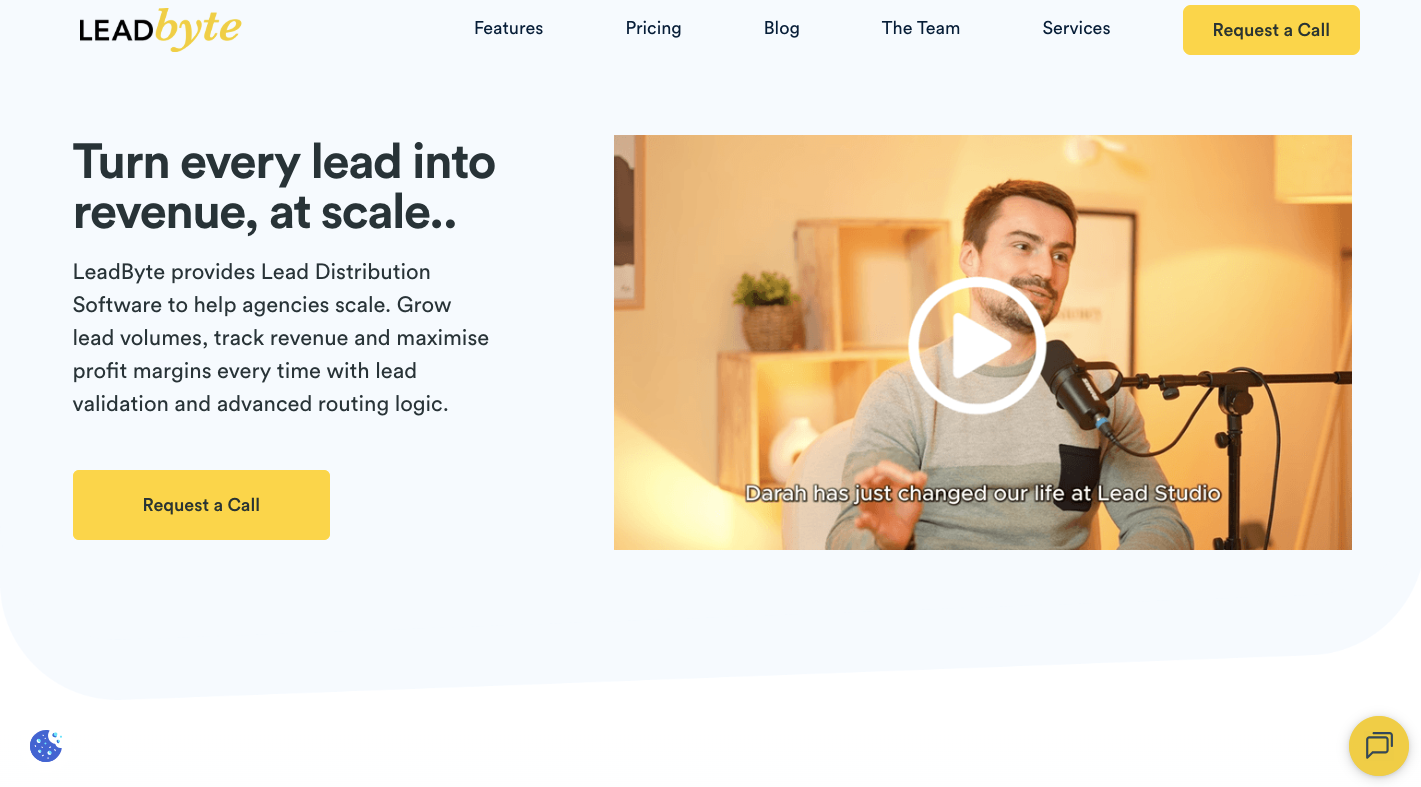
LeadByte’s primary job is to make sure only verified data enters your system. It focuses on split-second checks that block fake or low-quality submissions before they cost you money.
The moment a lead is submitted, LeadByte pings services such as home location register (HLR) lookup to confirm that a mobile number is active. When the data looks fake, the platform rejects it instantly, so you don’t pay for it.
It also prevents you from buying the same contact twice. You can create a rule like, “If this email entered my system within the last 30 days, reject it.”
Beyond filtering, it manages traffic between teams. If you have several sales representatives or buyers, LeadByte controls distribution with caps and schedules so no one gets overloaded.
Key Features
- Real-time data validation - The system checks phone status and email format the second a record enters.
- Duplicate and cooldown rules - You can define logic to stop repeat purchases and protect your budget.
- Automated SMS and email sequences - You define what data you collect, such as name, phone, and postcode. Then you set up SMS and email sequences.
- Traffic control with caps and schedules - You can set daily or weekly caps to keep your workload balanced when managing more leads. For example, “Stop sending leads to Team A after they reach 100 today and redirect traffic to Team B.”
- Flexible post URL integration - You provide a post URL to developers or affiliates so they send leads directly into your account without manual uploads.
- Lead nurturing analytics - Built-in reporting shows message performance, response trends, and contact rates so you understand which outreach drives real engagement.
4. Phonexa: Best for Multi-Channel Lead Distribution and Call-Tree Auctions
Source: phonexa.com
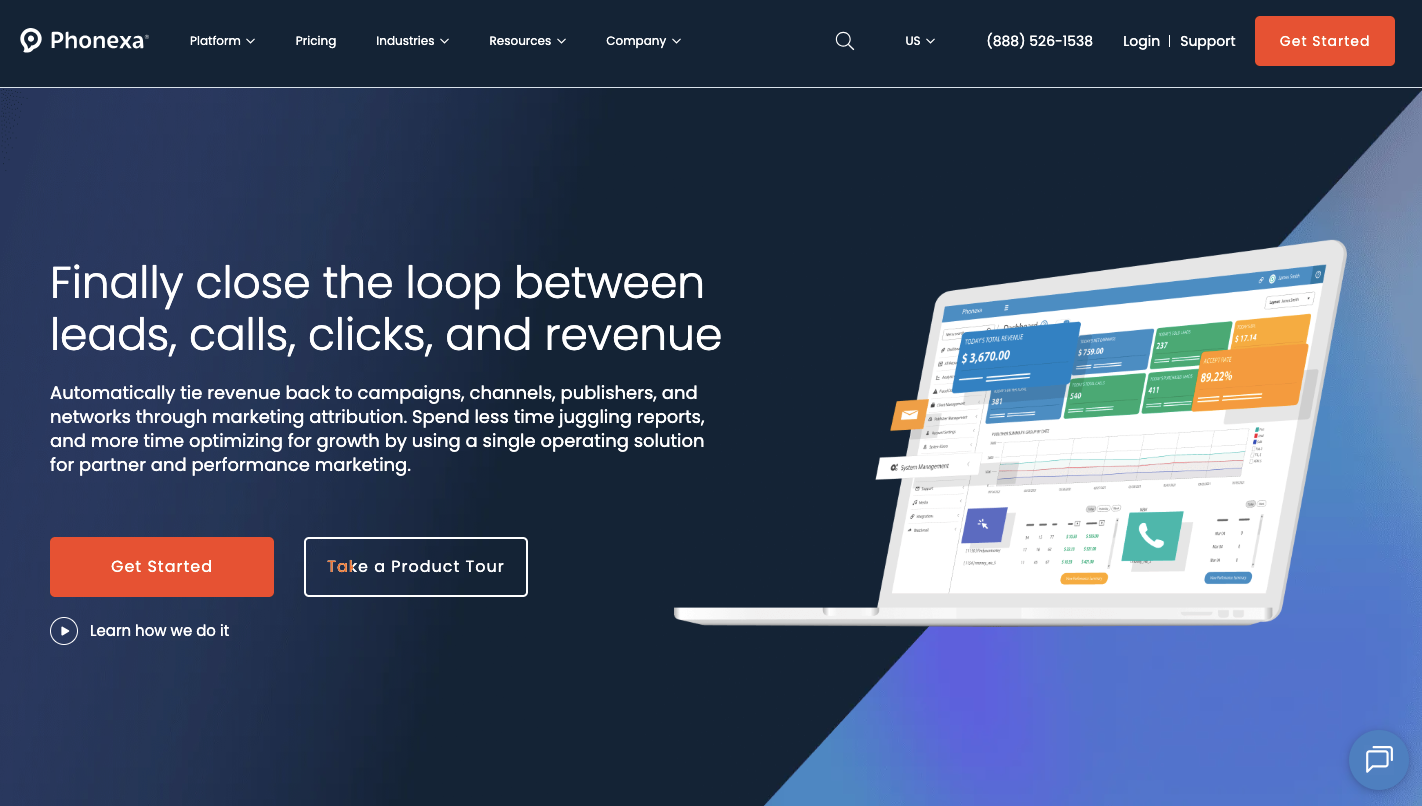
Phonexa focuses on multi-channel lead distribution and real-time call routing. Many teams use it as lead-tracking software because it connects web activity and voice calls in one system.
When someone fills out a form, the “LMS Sync” module captures the data, validates phone numbers and emails, and then routes the record based on your rules. As someone calls a tracking number, the “Call Logic” engine steps in.
An interactive voice response (IVR) menu can ask the caller to press 1 for sales or 2 for support. Based on location, availability, or bid value, the system routes the call to the right buyer or agent.
For networks that sell traffic, Phonexa also supports ping post auctions. It sends partial caller or lead data to buyers, collects bids, and posts the full details to the highest payer.
The e-delivery module is a dedicated email and SMS marketing platform for your pre-sales communication, which lets you follow up with prospects before a rep speaks with them.
Key Features
- Unified LMS sync - Captures form submissions, checks data accuracy, and routes records in real-time so web leads and calls connect under one profile.
- Call logic and auction routing - Uses ping post logic for calls. The system checks buyer availability and bid value before sending the caller to the highest paying or most qualified destination.
- Custom IVR menus - Allows you to build detailed call trees so callers provide intent before speaking to a rep, which improves qualification.
- Dynamic number insertion - Swaps phone numbers on your website based on traffic source, so you see which ad or keyword triggered the call.
- Fraud and compliance controls - Records calls, stores consent proof, and filters bot traffic before it reaches your team, protecting revenue and reputation.
5. LeanData: Best for Complex Lead-to-Account Matching
Source: leandata.com
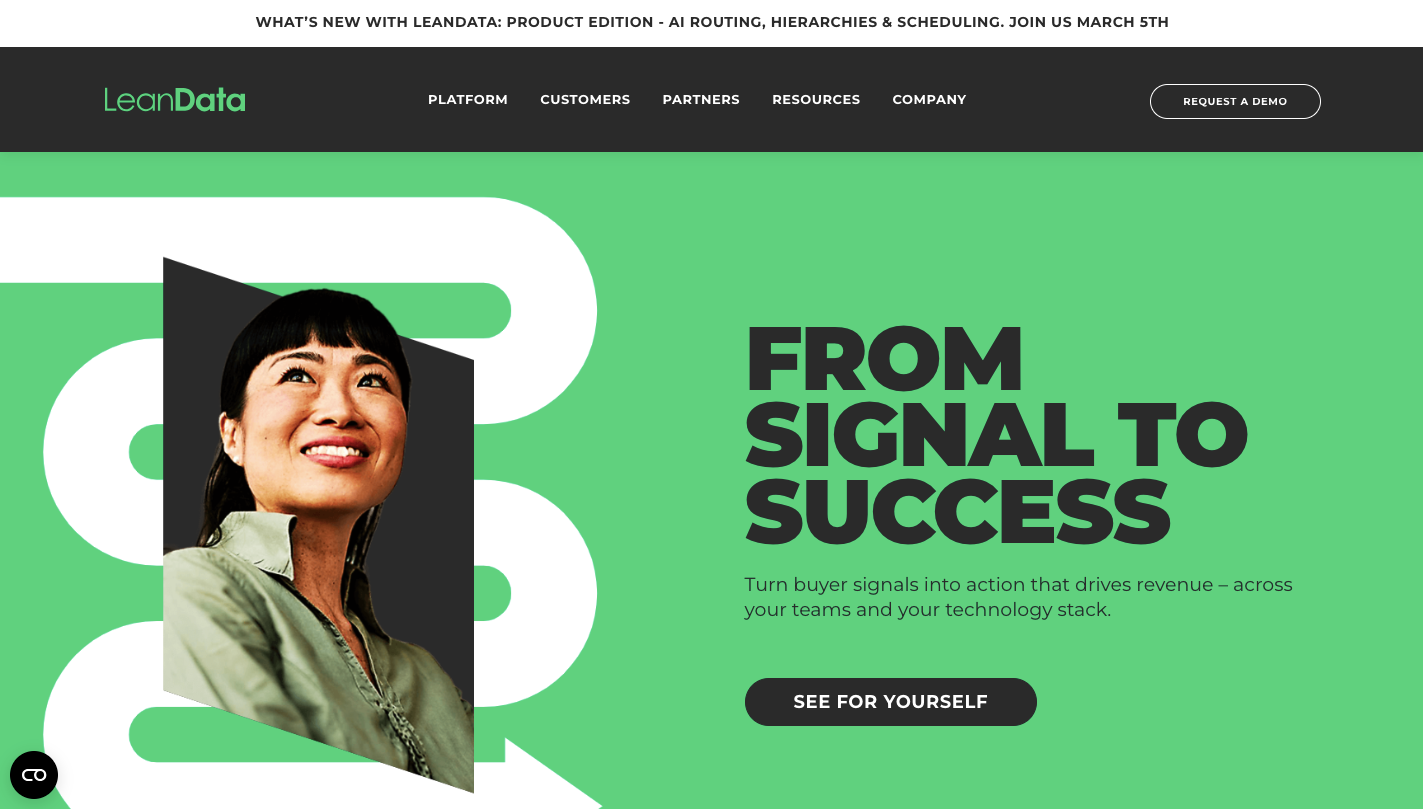
LeanData stops the double-calling nightmare where three different sales reps accidentally contact three different people at the same company because the data isn’t connected.
When a new lead, such as “Jane Doe at Google,” enters, LeanData instantly scans your Salesforce. It finds the existing Google account and links Jane to it. It can even match based on fuzzy logic, such as IBM versus International Business Machines.
In addition, it identifies buying committees. If five people from the same company visit your site or fill out forms, LeanData groups them together, so you’ll have coordinated sales efforts and better planning.
It further incorporates predictive analytics to help determine routing paths and response timing when multiple leads enter at once.
Key Features
- Buying committee identification - Groups contacts from the same company, so your team sees shared activity and understands account-level engagement.
- Configurable matching rules - You decide how strict the logic should be. You can match by email domain, company name, or website, depending on your data quality standards.
- Visual flow builder routing - Lets you draw a routing path from a new lead to account check to account owner assignment.
- Service-level agreement (SLA) and reassignment controls - Monitor response time and reassign records if no action occurs within a defined window.
- Audit and testing tools - Provides simulation and logs so you can confirm routing logic before it affects live revenue data.
6. LeadAngel: Best for Lead Distribution and Data Cleaning
Source: leadangel.com
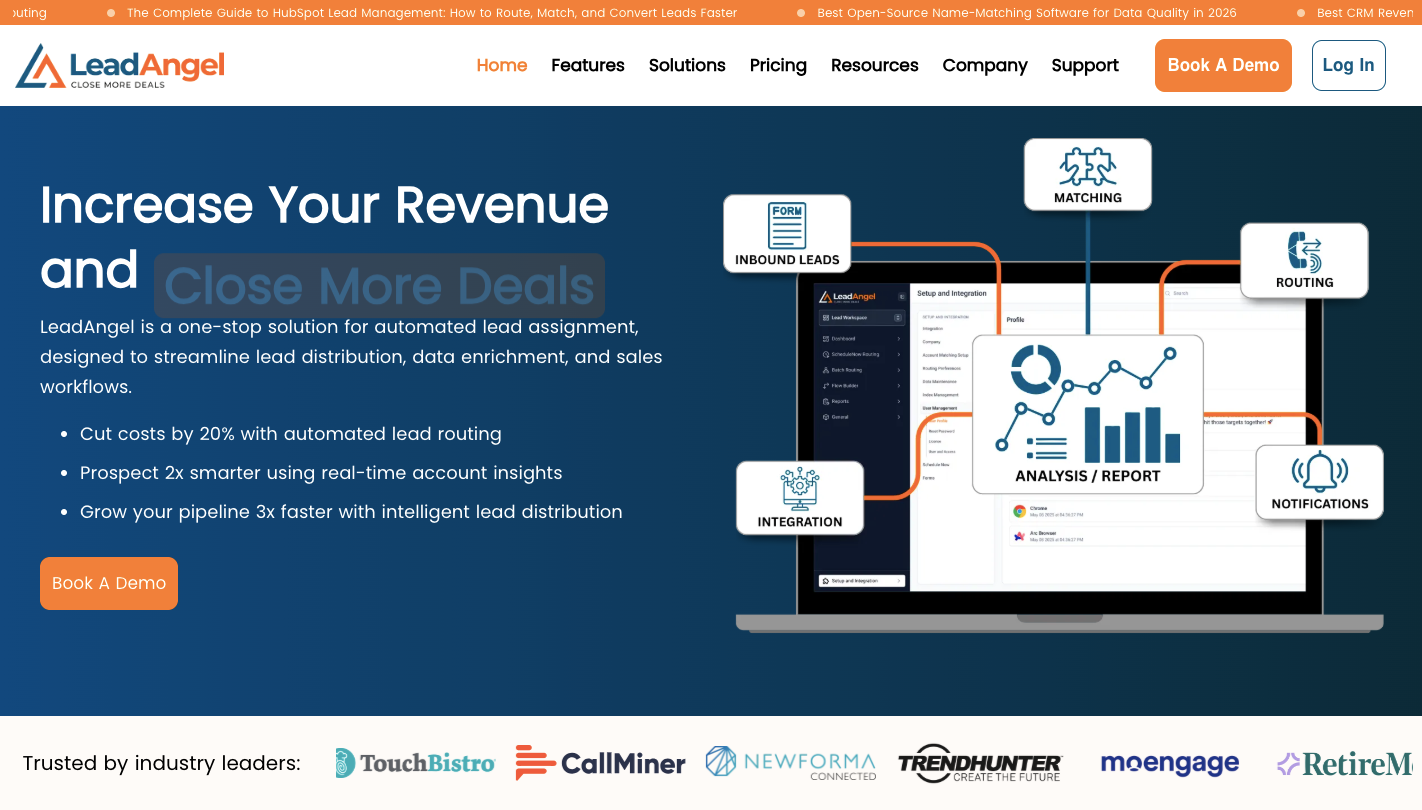
LeadAngel manages distribution, matching, and data hygiene before a rep ever makes a call. Many teams use it when the routing logic inside their CRM is too basic.
It focuses heavily on data cleaning. When a new record enters from your marketing efforts, LeadAngel checks for duplicates, matches it to existing accounts, and fills missing firmographic details.
When someone submits a form under IBM, the system looks for similar variations and connects the record properly.
Other than that, it connects to Salesforce Sales Cloud and controls how records flow into the sales pipeline. You can apply lead scoring rules before assignment, so higher intent prospects move faster.
Key Features
- Weighted round-robin routing - Distributes records based on territory, seniority, or performance, so high-value deals reach top performers.
- Data cleaning - Removes duplicates, standardizes fields, and appends missing company data before assignment to protect CRM quality.
- On-the-spot handoff - Allows instant transfer from an SDR to an available account executive while the buyer is still engaged, reducing delay in the sales pipeline.
- SLA response controls - Reassigns records automatically if a rep doesn’t act within a defined timeframe, which keeps accountability visible.
- Pipeline visibility dashboard - Shows where deals stall and how routing logic impacts conversion so you can adjust strategy quickly.
Maximize Lead Quality and Conversions With Standard Information
Standard Information gives you direct control over how leads are validated, priced, and delivered. It operates as a real-time auction and routing platform.
You can route leads instantly by geography, buyer capacity, pricing thresholds, or campaign schedules. The ping post engine lets multiple buyers compete, which helps you capture the highest possible value per lead.
Through the App Store, you can verify numbers, enrich records, or apply scoring logic before sending data downstream. Custom SMS, email, and webhook notifications push accepted leads directly into your CRM or other systems.
It further supports outbound or inbound lead requests without delays. With real-time reporting and margin tracking, you see exactly how each lead performs.
Own your lead flow from ping to post with Standard Information. Schedule your demo now!
FAQs About the Best Lead Management System
Which is the best lead management software?
The best lead management software depends on how your business operates. If you run a high-volume marketplace, Standard Information, a lead management software, works on your routing, validation, bidding, and distribution.
By pinging buyers, applying filters, and delivering validated records instantly, it reduces delays that can slow the sales cycle and protects revenue through strict compliance controls.
What is the best lead system?
The best lead system is the one that supports your workflow. Traffic brokers need bidding and compliance controls. Sales teams need automation and deal management.
What is a good lead tracking system?
A good lead tracking system gives visibility into the source, buyer response, and final outcome. Standard Information tracks pings, posts, acceptance rates, margins, and errors in real time. That data helps teams measure marketing campaigns and improve lead conversion based on actual buyer behavior.
With detailed logs and performance metrics, tracking leads becomes structured and measurable.
What is the best way to keep track of leads?
The best way to keep track of leads is to centralize data, automate follow-ups, and monitor every stage from capture to close.