Someone fills out a form at 2:03 PM. By 2:04 PM, the lead reaches a buyer.
Five minutes later, the buyer requests a refund after finding a fake phone number and a disposable email address tied to three other submissions.
Problems like that can become expensive quickly for marketplaces, agencies, and sales teams managing high-volume lead generation campaigns. Automated lead validation software helps you block low-quality records.
In this article, you’ll learn how automated lead validation works and which platforms offer the strongest features in 2026.
TL;DR
These are the five best automated lead validation software:
- Standard Information
- LeadsPedia
- LeadByte
- Phonexa
- boberdoo
What Is Automated Lead Validation Software?
Automated lead validation software checks every person who tries to enter your system and decides instantly if the lead is real enough to send to buyers.
In a lead distribution marketplace, that process happens in the short gap between someone clicking “submit” and the lead reaching a customer relationship management (CRM). The system validates incoming lead data instantly to confirm the submission is legitimate.
The process usually starts with basic validation checks. Does the email address exist? Does the phone number connect to an active carrier? Did the submission come from a fake IP address or a disposable account?
After verification finishes, the software compares the lead against buyer rules. Does the person live in a state the buyer serves? Has the same submission entered the system during the last 30 days?
Lead generation automation helps filter out junk data without requiring manual review. Companies improve their lead management by rejecting bad information before it enters the database.
In practice, it prevents bad leads from reaching sales and buyer teams in the first place.
5 Best Automated Lead Validation Software in 2026
The right platform helps connect CRMs, buyers, routing systems, and validation tools while reducing manual review work across the sales cycle.
These are the most powerful lead generation tools in 2026:
1. Standard Information: Best All-in-One Lead Validation and Distribution Platform
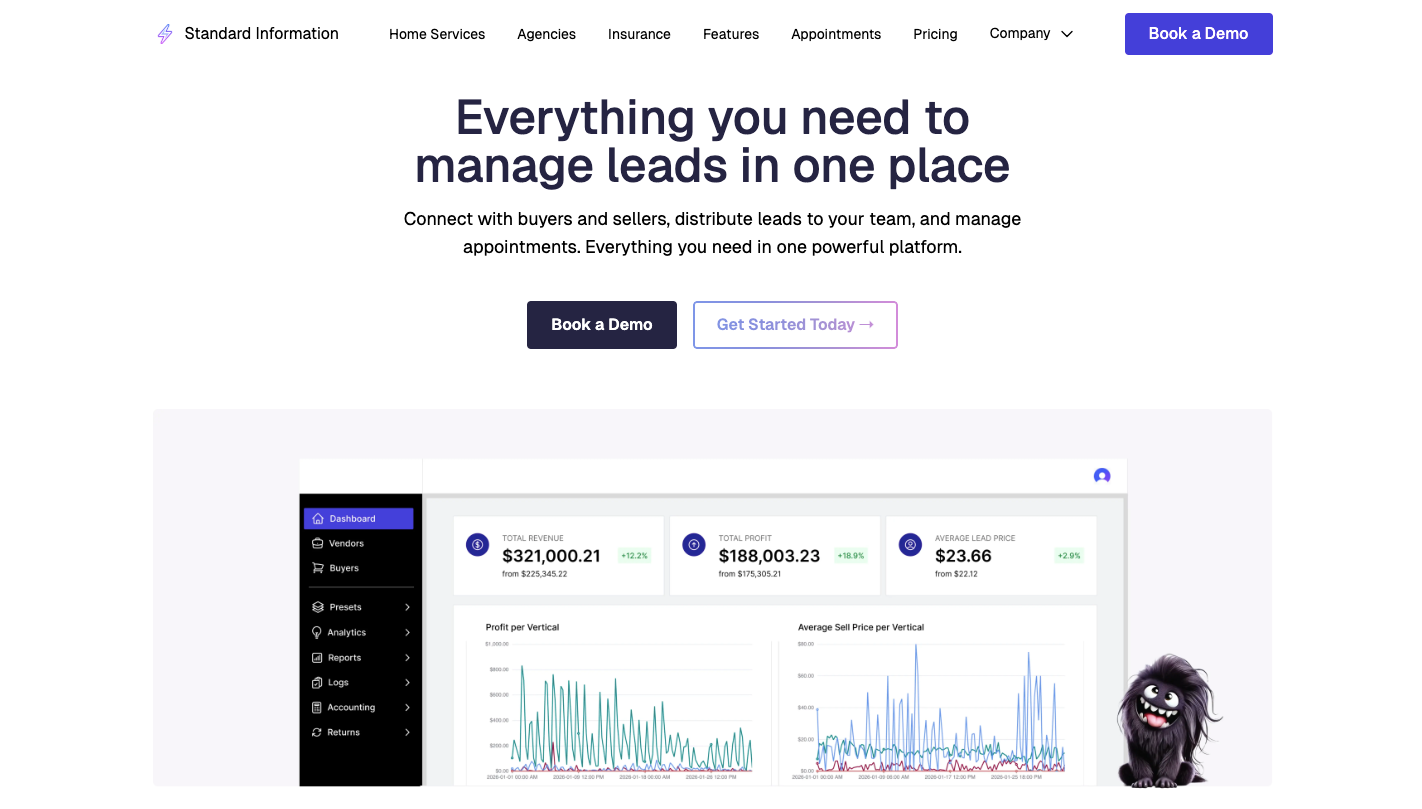
Standard Information combines lead validation, ping-post auctions, buyer routing, and marketplace management inside one platform.
It validates phone numbers, emails, duplicates, and fraud signals before the lead reaches buyers or internal teams. Once validation finishes, the platform can route the lead instantly based on geography, bid price, schedule, or buyer capacity.
Additionally, buyers can bid on incoming leads in real time, while sellers manage publishers, vendors, and routing rules from the same dashboard. Standard Information also supports live call routing, AI-powered appointment booking, SMS delivery, email notifications, and webhook connections for CRM syncing.
Key Features for Lead Validation
- Real-time lead validation - Verifies emails, phone numbers, duplicate records, and fraud indicators before accepting leads into the marketplace.
- Ping-post auctions - Standard Information can ping several buyers simultaneously, then route the lead to the highest bidder within seconds.
- Advanced duplicate rules - Users can block duplicate submissions using phone numbers, emails, or custom identifiers chosen inside the platform.
- Blacklist filtering - The system blocks profanity, litigation lists, opt-outs, suspicious traffic, and unwanted lead sources automatically.
- AI call center - Automates call routing, appointment booking, and lead-handling workflows around the clock.
- No-code buyer integrations - Teams can connect buyers quickly by mapping fields, configuring responses, and testing delivery rules before launch.
- Custom routing filters - Buyers can receive leads based on geography, bid amount, schedules, capacity limits, or campaign timing rules.
- Real-time reporting - Transaction logs, routing activity, ping-post results, and delivery errors appear immediately in the reporting dashboard.
- Compliance protection - Standard Information supports TCPA validation workflows and stores delivery details needed for marketplace compliance tracking.
2. LeadsPedia: Best for Affiliate and Performance Marketing Networks
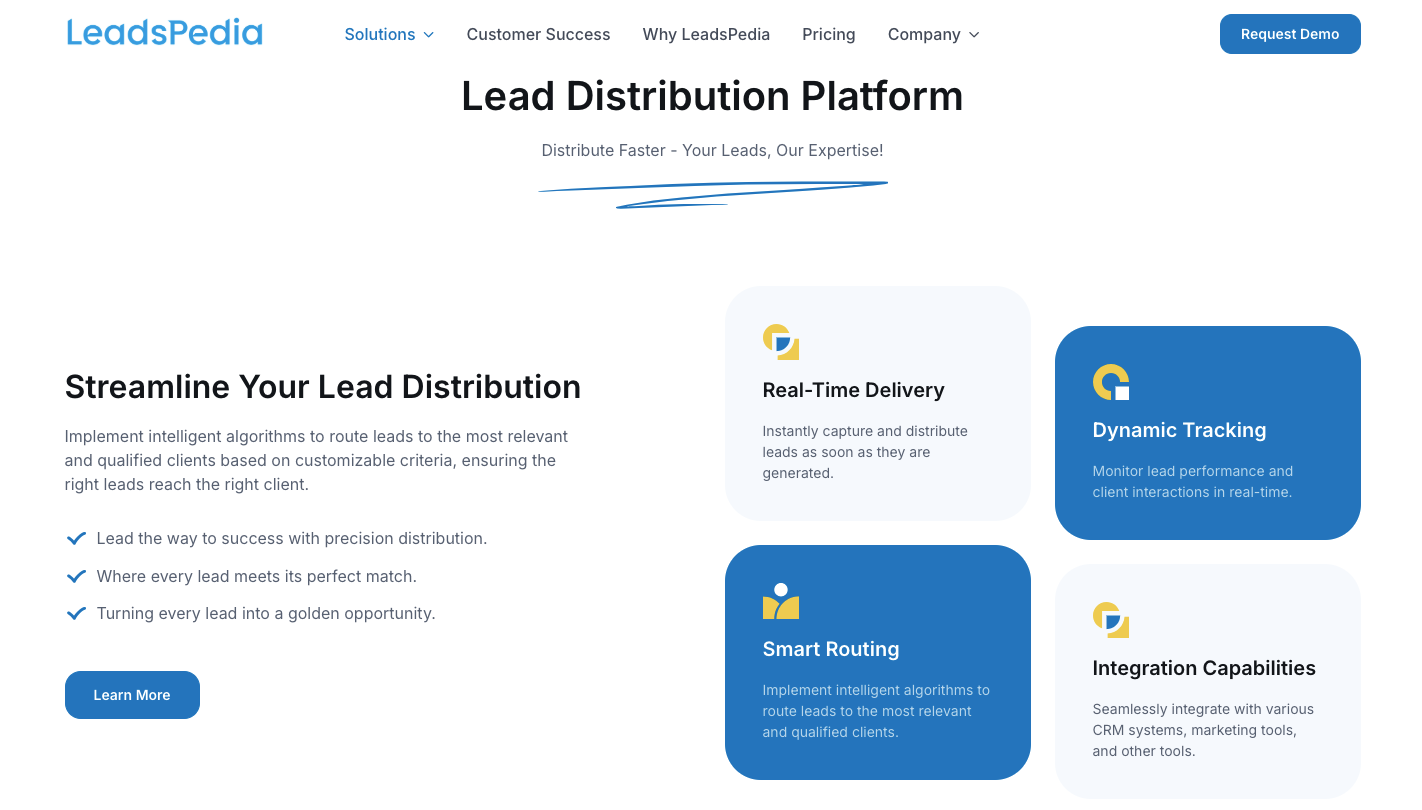
Source: leadspedia.com
LeadsPedia checks submissions the second someone clicks “submit” on a form. It checks if the email is real, the phone number is active, and if the address exists. If the lead fails, it is rejected before it even enters your system.
The platform also handles ping-post auctions in real time. Before a lead is fully validated, the software “pings” buyers to see who will pay the most for it.
Once the highest bid is identified, the software completes the validation and “posts” the lead to that buyer.
The partner dashboard gives affiliates direct access to reporting and campaign performance data.
Key Features for Lead Validation
- Real-time email validation - The software checks whether the email address is real and active before the lead reaches a buyer or CRM.
- Phone verification - It inspects whether the phone number is a real working line instead of a fake or “burner” phone often used for spam submissions.
- Duplicate detection - The system checks every new lead against your old leads to make sure you aren’t buying the same person twice.
- Fraud detection - Watches for suspicious IP addresses, impossible submission speeds, and repeated device activity tied to bot traffic.
- Custom validation rules - LeadsPedia lets you build your own “Yes/No” rules for each category based on buyer requirements or campaign rules.
- Vertical-based filters - You can set a rule that says “Only accept people who own a home” for a roofing campaign or reject leads outside a service area.
- Ping-post routing - LeadsPedia uses sales automation to route winning bids to buyers in milliseconds after validation finishes.
3. LeadByte: Best for Data Hygiene

Source: leadbyte.co.uk
LeadByte focuses heavily on data hygiene for companies that buy leads from many traffic sources, affiliates, and landing pages.
It focuses heavily on data quality by rejecting incomplete, duplicate, or improperly formatted submissions. A disconnected phone number, fake email, or duplicate record can get blocked immediately after form submission.
The platform can even fix formatting problems automatically. It can correct names typed like “jOHN sMITH,” remove broken phone formatting, and clean records before distribution starts. Those automated fixes reduce the manual cleanup work that slows review teams down.
LeadByte also includes reporting dashboards and data analysis tools that show you exactly which sources are sending “dirty” data. Many companies use those reports and data analytics to measure how cleaner records improve conversion rates and overall ROI.
Key Features for Lead Validation
- HLR phone validation - LeadByte sends a live signal to the mobile carrier to check whether the phone is active and connected to a network before accepting the lead.
- Email inbox verification - The platform checks whether the email inbox actually exists, rather than just checking the formatting.
- Duplicate prevention - Compares new records against older submissions using phone numbers, emails, and IP activity to block repeat entries.
- Suppression list filtering - Companies can upload lists of unsubscribed users or blocked contacts to stop those records from entering the marketplace again.
- Automatic data cleanup - Fixes formatting issues like incorrect capitalization, extra symbols, and broken phone structures automatically.
- Custom validation rules - Users can reject personal email domains, block low-value traffic, or accept only leads that match strict buyer requirements.
- Reject and redirect logic - The platform can reject bad submissions instantly and return an error message to the original form before payment happens.
- Traffic source reporting - Reporting tools help marketplaces identify which affiliate sources produce the cleanest or lowest-quality records.
4. Phonexa: Best for Multi-Channel Operations
Source: phonexa.com
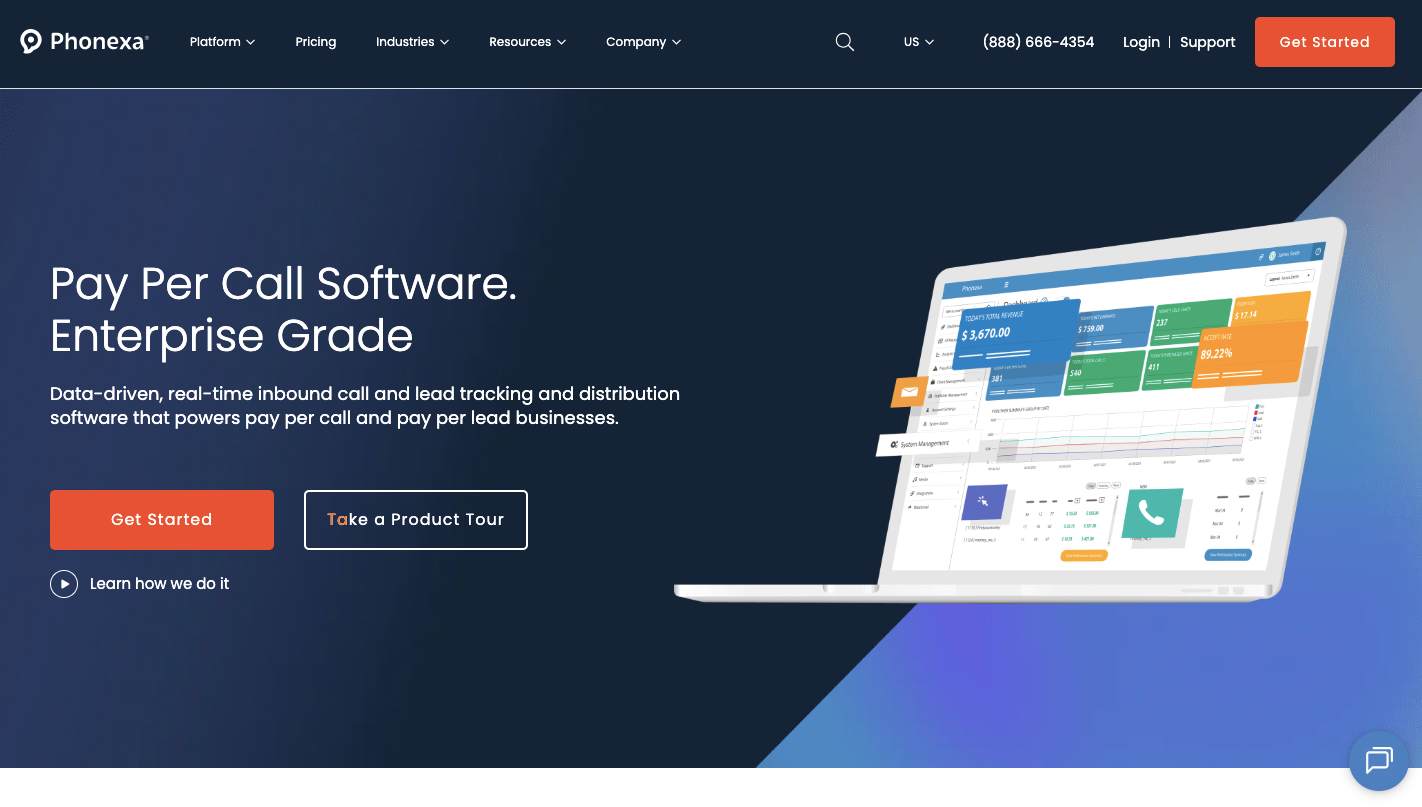
Phonexa combines lead tracking, phone call management, and automated marketing into one central dashboard. Since teams can track both web forms and phone calls from the same dashboard, it is easier to follow the full customer journey.
When a lead comes in through a form, the system immediately verifies the data. It checks whether the email is valid and the phone number is active. If that same person calls five minutes later, Phonexa links both interactions together so sales teams don’t treat them like separate people.
That helps sales teams respond faster across calls, forms, texts, and email interactions.
Key Features for Lead Validation
- LMS sync validation - Verifies email addresses, phone numbers, and address details immediately after form submission, before routing the lead.
- Call logic IVR - Its “Call Logic” feature uses automated Interactive Voice Response (IVR) prompts to ask callers questions before sending them to an agent.
- Caller qualification - The system can ask, “Press 1 if you are looking for a home loan.” If it’s a robocall or a caller who doesn’t fit the campaign, the software can automatically disconnect or reroute the call.
- Unified lead profiles - If someone fills out a form and later calls the business, the platform combines both interactions into one lead record.
- Consent tracking - Phonexa tracks TCPA consent through forms, calls, and opt-in actions from different channels in one location.
- Built-in call tools - Integrated phone systems help teams qualify callers before agents answer the line.
- Full journey reporting - The platform combines several marketing tools to show how leads move from ads and forms into calls, emails, and buyer responses.
5. boberdoo: Best for Complex Routing Logic
Source: boberdoo.com
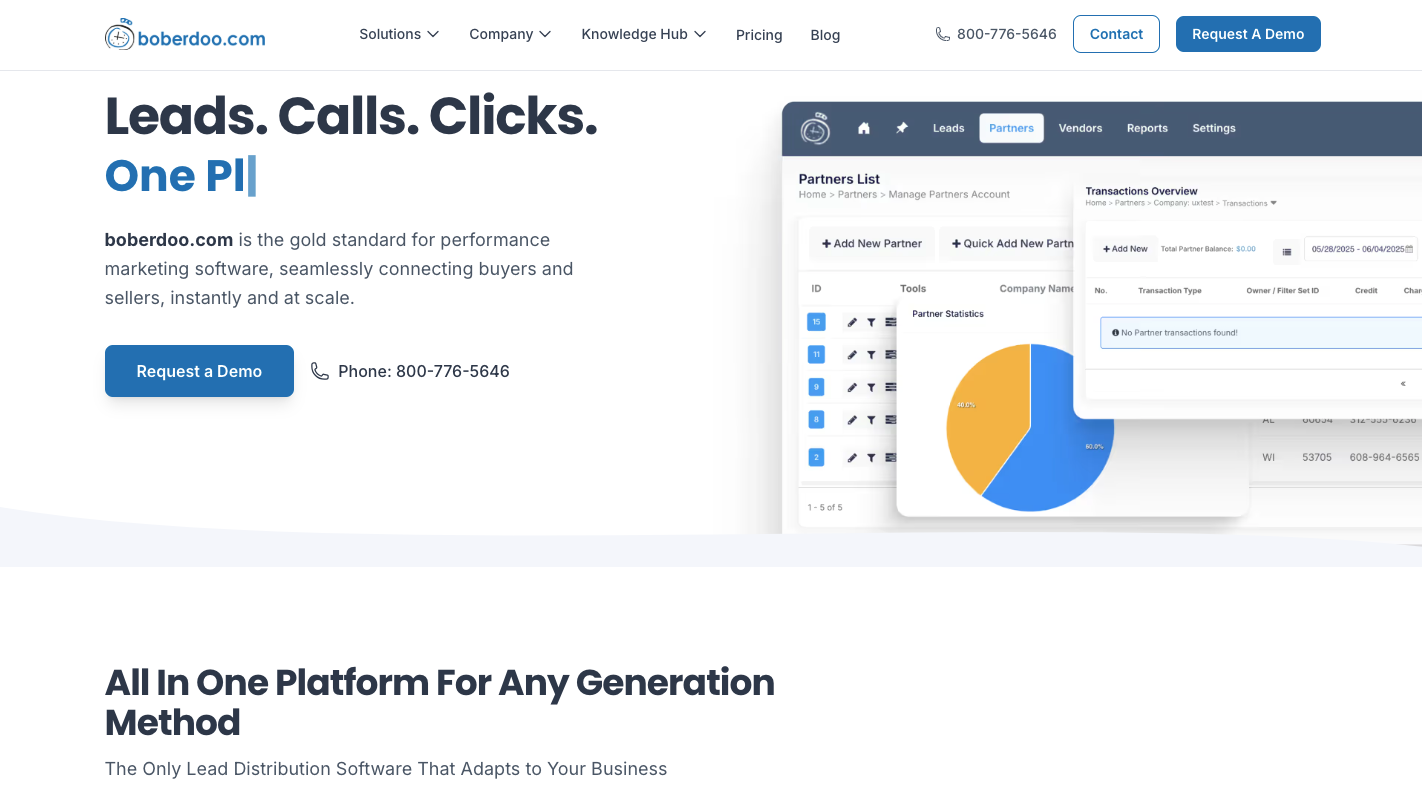
boberdoo functions as a routing engine for lead marketplace that handle large buyer networks and complicated routing rules.
One buyer may only want leads from Florida during business hours, while another may accept weekend traffic with higher budgets. boberdoo inspects every condition before sending the lead anywhere. It uses workflow automation to send leads to buyers based on their unique budgets, schedules, and campaign rules.
Many marketplaces use boberdoo to capture and route leads 24/7 while reducing manual review work.
Routing rules also help buyers receive leads that are ready for immediate follow-up.
Key Features for Lead Validation
- Advanced buyer filters - Let users create “if-then” rules based on geography, budget, age, service type, or campaign timing before routing begins.
- Real-time ping-post auctions - Sends anonymous lead details to buyers first, then routes the full record to the highest bidder after validation finishes.
- Automated lead scoring - It uses predictive lead scoring to estimate the future value of an incoming lead before assigning distribution priority.
- AI-based routing logic - With AI-driven lead scoring, the system learns which data points lead to actual sales and routes stronger prospects faster.
- Instant delivery logic - The routing engine is built to deliver hot leads to buyers in real-time, which increases sales engagement before interest drops.
- Third-party validation integrations - Connects with tools for phone verification, compliance checks, LinkedIn automation, email marketing automation, and Salesforce Marketing Cloud syncing.
- Follow-up automation - Validated records can move directly into email marketing campaigns or SMS sequences to begin lead nurturing immediately after approval.
Key Features of Automated Lead Validation Software
To make it easier for you to choose, consider these features:
Real-Time Email and Phone Validation
Real-time validation starts the second someone submits a form. Validation starts by checking email formatting, testing whether the domain exists, and confirming the mailbox can receive messages.
Phone validation works the same way. The software pings mobile networks to verify contact details in less than a second. It can detect disconnected numbers, VOIP services, and inactive lines before the lead reaches a buyer.
Performing lead verification at the point of entry stops users from submitting fake names. Real-time checks also improve every instance of data capture on your form because users can fix mistakes before leaving the page.
Buyers rely on verified contact data to reach decision-makers quickly instead of wasting time on dead numbers.
Duplicate Lead Detection and Prevention
Duplicate checks stop marketplaces from selling the same person twice. The system uses lead tracking to remember every person who signed up recently. Most platforms compare phone numbers, email addresses, IP activity, and device fingerprints to spot repeat entries even when someone changes their name slightly.
This feature helps marketplaces to track leads from different websites and identify recycled submissions. That process prevents buyers from receiving the same record repeatedly and avoids bothering existing customers with outdated offers. Some systems reject duplicates globally, while others block the record only for a specific buyer.
Either way, the check confirms new leads are unique before they enter the sales process.
Fraud Detection and Blacklist Filtering
Fraud filters look for behavior that doesn’t match real human activity. Modern lead generation automation tools use hidden “honeypot” fields to trap bot programs that fill out forms automatically. The platform also monitors anonymous website visitors to see if they behave like real users or automated scripts.
Suspicious IP addresses, repeated device activity, and impossible form completion speeds often trigger automatic rejection. Advanced automation systems can block those submissions before they reach buyers or sales teams.
Blacklist filters add another layer by blocking known spam emails, risky phone numbers, and banned traffic sources. Filtering out scammers helps keep real potential customers inside your sales funnel.
Data Enrichment and Third-Party Integrations
Some leads arrive with only a name, email, and phone number.
Lead enrichment tools can add company size, job title, industry, and location details automatically. They pull company data from external databases to give buyers more context before the first call.
Smooth CRM integration automatically sends approved submissions directly into your tech stack. These integrations keep your customer relationship management platform organized and updated with fresh records.
Some platforms even work as an all-in-one CRM that handles validation, routing, and storage from the same dashboard.
Custom Validation Rules and Filters
Every buyer wants different types of leads, which explains why custom filters are important in lead qualification. A marketplace can reject people outside a service area, block low-budget requests, or prioritize certain project types before routing begins.
Intent data also helps businesses identify prospects who show stronger buying signals. Someone requesting “roof replacement” often carries more value than a person asking general questions.
The system can use “if-then” logic to move only qualified leads to the next stage. These filters help sales teams focus on the strongest opportunities first.
Strong filtering helps sales teams focus on leads that are more likely to convert.
Compliance Checks, TCPA, and Data Privacy
Legal safety remains one of the key considerations when buying or selling leads. Compliance checks protect buyers, sellers, and consumers during lead generation campaigns.
Protecting customer data is required by law, and the platform stores proof showing when and where the person gave consent. That record may include timestamps, IP addresses, and form activity.
Most marketplaces also check phone numbers against suppression and Do Not Call lists before routing begins.
Staying compliant protects customer relationships and reduces refund disputes between buyers and sellers. Many systems attach compliance certificates to each file to support long-term deal management and provide proof during audits or complaints.
Turn Every High-Quality Lead Into an Opportunity With Standard Information
Standard Information helps validate, route, and distribute leads from one platform.
If the lead fails validation, it never reaches the buyer. When the record passes, the platform can ping multiple buyers at once, compare bids, and send the lead to the highest bidder within seconds.
Custom routing rules also give you more control over lead flow. Buyers can set budgets, schedules, pricing limits, and location filters while sellers monitor traffic quality and campaign performance from one dashboard.
Automation also protects lead nurturing workflows by blocking fake emails and recycled submissions before follow-up campaigns begin.
FAQs About Automated Lead Validation Software
What is automated lead validation software?
Automated lead validation software checks lead data automatically to confirm that contact details, intent signals, and customer information are accurate before leads enter your sales pipeline.
How does automated lead validation work?
The software scans submitted lead data in real time, verifies phone numbers and emails, checks for duplicates or fake entries, and scores leads based on predefined qualification rules.
Does lead validation improve conversion rates?
Yes. Lead validation improves conversion rates by helping sales teams focus on accurate, high-intent leads instead of wasting time on invalid or low-quality submissions.
Can lead validation software detect fake leads?
Yes. Most lead validation platforms can detect fake leads by identifying spam patterns, disposable emails, bot activity, invalid phone numbers, and suspicious form submissions.