Sometimes you’re not replacing Chili Piper because it’s bad.
You’re replacing it because it cannot do that one thing you need. That might be handling leads, running marketing flows, or keeping client info organized.
When you start searching, too many options promise too much, and you don’t know who to believe.
This guide breaks down the top six Chili Piper alternatives and what each one is meant to help with.
When scheduling alone is not enough, lead control comes first. See Standard Information in action!
Overview
The following are the top six Chili Piper alternatives in 2026:
- Standard Information - Best overall alternative for lead distribution
- RevenueHero - Best alternative for B2B lead routing
- Acuity Scheduling - Best alternative for built-in client management
- HubSpot - Best alternative for full-suite marketing and sales
- Apollo.io - Best alternative for enrichment data
- Dashly - Best alternative for AI-powered scheduling and lead management
What Chili Piper Does Well and Where It Slows Teams Down

Source: chilipiper.com
You’ll usually run into Chili Piper when fast replies feel important after someone fills out a form.
Many sales teams use it to keep scheduling meetings moving when inbound traffic stays high. It also handles automated scheduling and lead routing, which removes a lot of your manual work during busy days.
Chili Piper comes with a few tools that work together, such as:
- Distro manages record routing by integrating with Salesforce
- ChiliCal lets reps share open times by email
- Handoff helps sales development representatives (SDRs) place meetings on account executives' (AE) calendars during live calls
- Chat tools talk with visitors who skip forms
Although many teams see it as a great instant-scheduling software option, it can sometimes be lacking. These are the key factors why others look for alternatives:
- User feedback often points to a steep learning curve tied to Chili Piper’s advanced features
- Admin control slows changes when reps need quick updates
- Some users report having Google Calendar sync issues that lead to missed follow-ups
- The system supports complex lead routing, but doesn’t cover full lead management
Top 6 Chili Piper Alternatives in 2026
These are the top Chili Piper alternatives:
1. Standard Information: Best Overall Alternative to Chili Piper for Lead Distribution

Standard Information isn’t a scheduling tool in the usual sense. You can use it when leads are no longer just meetings to book, but assets to control, price, route, and protect.
It is like a real-time lead marketplace where every incoming lead gets checked, enriched, scored, and then sent to the best possible destination within seconds.
The user interface shows each step clearly, so you can see decisions as they happen. Standard Information also integrates seamlessly with major customer relationship management (CRM) systems, as well as email, SMS, and webhooks, keeping everything connected.
Key Features
Here are the features that make Standard Information an all-in-one solution for your leads:
- Real-time lead routing - Every lead moves the moment it arrives. You set rules based on location, score, time of day, buyer capacity, or campaign limits.
- Ping-post auctions - The platform sends partial lead data to multiple buyers at once. It then delivers the full lead to the highest bidder within milliseconds.
- Lead validation and protection - Before delivery, leads run through automatic checks. Blacklists block opt-outs, litigation risks, and unwanted records, so bad data never reaches your partners or team.
- Data enrichment apps - Built-in apps pull extra details from third-party providers.
- AI call and booking automation - Ping-post appointments let you buy, sell, and route live bookings and calls around the clock.
- No-code integrations - You connect buyers using an AI-assisted builder.
- Reporting and logs - Dashboards show lead volume, bid results, delivery speed, and errors as they happen. Transaction logs explain why a lead was accepted, rejected, or rerouted, so changes stay simple.
- Compliance and security - Built-in compliance tools support Telephone Consumer Protection Act (TCPA) checks and secure transactions.
2. RevenueHero: Best Alternative for B2B Lead Routing
Source: revenuehero.io
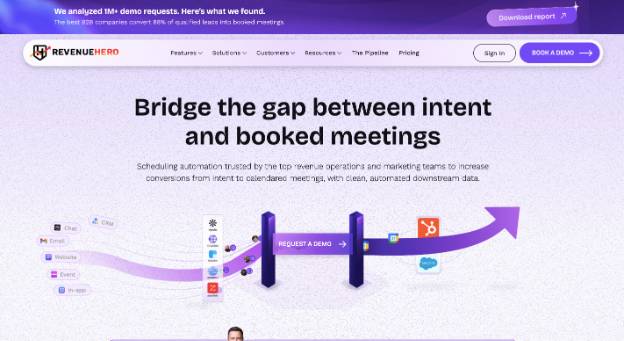
RevenueHero acts as a conversion layer between your website forms and your calendars.
Once someone fills out a form, the system checks a few rules, then a calendar appears so prospects can book meetings instantly.
You connect your Google Calendar or Outlook accounts and link your CRM, usually Salesforce or HubSpot. From there, RevenueHero handles team scheduling and routing without heavy configuration.
For new requests, it spreads meetings evenly between reps. Otherwise, it checks ownership first and shows the same calendar every time.
It also supports group meetings, shared team availability, and basic schedule management. Support stays hands-on, and the support team is always just a Slack message away, which helps when things move fast.
Key Features
- Fast booking widget - The booking widget loads quickly, which reduces drop-off for visitors who wait too long.
- Smart routing rules - You decide who receives meetings using ownership checks or fair rotation.
- Automated lead qualification - The system filters requests before calendars appear, so reps only see good fits.
- CRM ownership check - It pings your CRM in real time and shows the calendar for the current owner.
- Round robin distribution - Net new leads rotate using strict or weighted rules for fair coverage.
- Shared availability - Pair reps for demos or group meetings so bookings only happen when everyone can attend.
- Booking links - Reps share links that skip extra forms and move faster.
- Routing visibility - Logs explain why each meeting went to a specific rep.
- Focused setup - The product stays laser-focused on forms and scheduling links.
Where it Falls Short as a Chili Piper Replacement
RevenueHero has no native chat, so teams that rely on live site conversations need another product. Integration options stay narrower than enterprise tools with large ecosystems.
Companies with heavy reporting needs may further miss deeper analytics.
3. Acuity Scheduling: Best Alternative for Built-In Client Management

Source: acuityscheduling.com
Acuity Scheduling is an all-in-one appointment management platform for time-based businesses. Consultants, coaches, clinics, and service providers who want more than just a calendar rely on it to handle bookings, payments, and intake.
Unlike Chili Piper, which focuses on routing leads to sales reps, Acuity focuses on client self-service and payment collection.
The setup is more about setting up a storefront than routing a lead. You connect calendars, then create services clients can book. Each service has a name, price, and length.
Many sales teams still use Acuity when they want the right scheduling tools for paid calls or demos that don’t need routing rules. It further tracks team availability, handles scheduling processes, and avoids double bookings.
For teams who need more than just scheduling, Acuity helps improve customer engagement before calls even start.
Key Features
- Client intake forms - Clients answer questions before booking, so you start calls with context.
- Digital signatures - Terms and waivers get signed during booking.
- Calendar controls - You limit the number of sessions per day or week.
- Minimize gaps - Meetings cluster together so schedules stay clean.
- Buffer time rules - Gaps appear before and after sessions to protect energy.
- Timezone detection - The system shows times in the client’s local zone.
- Email and SMS reminders - Messages reduce no-shows before sessions.
- Client accounts - Repeat clients manage bookings on their own.
Where it Falls Short as a Chili Piper Replacement
Acuity cannot assign meetings based on company size, territory, or ownership. Since everyone sees the same booking flow, you can’t control who can see a calendar.
SDR-to-AE handoffs during live calls also don’t exist.
4. HubSpot: Best Alternative for Full-Suite Marketing and Sales
Source: hubspot.com
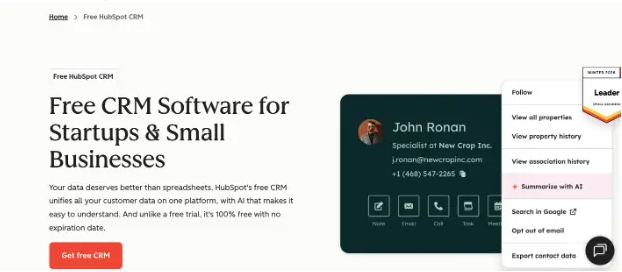
HubSpot combines Marketing, Sales, Service, and Operations Hubs into one database.
Since the form and the calendar are both HubSpot products, there’s zero lag. Data doesn’t need to sync between platforms because it already lives inside the same system, so your marketing and sales teams only need a few tools.
You can start by creating a form on your landing page. Using “Dependent Fields” or “Form Redirects,” you control what happens next.
For instance, when “Company Size equals 1 to 10,” the visitor lands on a thank-you page. For “Company Size equal to 50+,” the round-robin meeting link appears.
That flow supports built-in forms and chat flows for lead capture and meeting scheduling without third-party tools. HubSpot also sends automated reminders and keeps records tied to contacts, which helps with customer interactions.
Key Features
- Round-robin meetings - Requests rotate between reps based on availability.
- Calendar sync - Google or Outlook calendars update availability in real time.
- Form-based logic - Forms decide when a calendar appears.
- CRM ownership checks - Returning contacts see the same rep.
- Lifecycle updates - Bookings update contact status instantly.
- Email booking slots - Prospects click time options inside emails.
- Shared inbox alerts - You see new bookings right away.
- Single contact record - Every action stays tied to one profile.
- Chat-based capture - Conversations collect info before booking.
Where it Falls Short as a Chili Piper Replacement
Rules often rely on a single data point at a time. Booking flows can feel step-heavy compared to instant pop-ups.
Form abandonment tracking stays limited, which makes follow-ups harder. Larger orgs can hit workflow and field limits as systems grow, too.
5. Apollo.io: Best Alternative for Enrichment Data
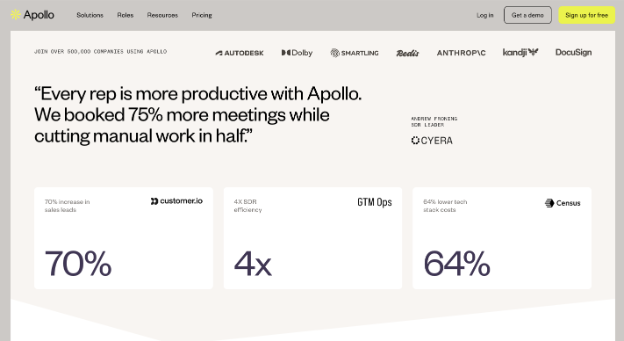
Apollo.io offers lead data, outreach, and booking. It knows who the lead is through its own database, so it can score them instantly. High-scoring leads get the calendar right away, while others move into follow-ups.
You can start by defining who your best leads are in Apollo.io. For example, VPs of Marketing at companies with 50 to 200 employees use Salesforce.
Once that profile exists, Apollo.io checks every form fill against it. Since the data is enriched in the background, you don’t have to annoy prospects with long forms just to qualify them for a demo.
A lot of teams describe the interface as user-friendly. With its integration capabilities, you can easily connect to HubSpot and Salesforce.
Key Features
- Instant lead scoring - Apollo.io scores leads the moment an email appears.
- Profile-based routing - Calendars only show when visitors match your ideal customer profile (ICP).
- Background enrichment - Company and role details fill in without extra questions.
- Short form setup - Prospects submit fewer fields before booking.
- Round-robin booking - Meetings rotate fairly between reps.
- Outbound follow-ups - Sequences run when meetings don’t book.
- Outbound booking links - Prospects choose times from email messages.
Where it Falls Short as a Chili Piper Replacement
Apollo.io focuses on enrichment first, which can slow booking. Some users even report that Apollo.io widgets can load more slowly since enrichment runs at submit.
Then, when a lead routes incorrectly, answers to “Why did this happen?” feel harder to find. Chili Piper logs each rule clearly, while Apollo.io reporting leans toward outreach data.
6. Dashly: Best Alternative for AI-Powered Scheduling and Lead Management

Source: dashly.io
Instead of waiting for a prospect to find your “Contact Us” page, Dashly proactively starts a conversation, qualifies the lead via chat, and books the meeting directly in the messenger window.
Let’s say a user types, “I’m looking for a demo for a team of 50,” the bot understands intent and shows the calendar right away. A static form processor would still wait for a submit click.
Dashly uses AI-based marketing automation to streamline scheduling and lead-to-account matching, which helps route conversations to the right sales rep.
You can build a Playbook and tell the AI how to react. For example, “If a visitor comes from a company with more than 100 employees, ask about availability.”
Calendars stay accurate since they sync with Google Calendar and Outlook. That flow improves scheduling efficiency and keeps the appointment booking process simple.
Companies often use Dashly to focus on the most valuable prospects without long forms.
Key Features
- Proactive chat start - The bot opens conversations based on page behavior.
- Intent recognition - Messages trigger booking when high interest appears.
- Playbook logic - Chat flows follow rules you define.
- Calendar sync - It syncs with Google Calendar and Outlook.
- Lead tracking: Chats and actions stay tied to a single record.
- CRM updates - Data pushes into HubSpot or Salesforce.
Where it Falls Short as a Chili Piper Replacement
Teams that rely on traditional forms may find chat flows limiting. Set up, in addition, can feel confusing at first.
Additionally, live SDR-to-AE phone handoffs remain limited, which makes it less suitable for call-heavy sales teams.
Fix Slow Lead Distribution Today With Standard Information
Slow routing kills deals, especially when speed decides who wins the lead. Standard Information exists for moments when basic meeting tools stop keeping up.
Each lead is checked, enriched, and evaluated upon arrival. From there, rules decide whether it goes to your internal team, an outside buyer, or a live calendar.
Ping-post auctions let multiple buyers respond at once, which raises value without extra work. Built-in validation blocks duplicates and bad data before anyone touches the lead.
There are dashboards that show what happened to every record and why. Those views provide valuable insights into delivery speed, pricing, and buyer behavior.
So, if Chili Piper feels limited to booking speed, Standard Information handles the full lead flow that comes before and after the meeting.
Take control of every lead before and after the meeting. Book a demo now!
FAQs About Chili Piper Alternatives
Why do teams switch away from Chili Piper?
Teams switch away from Chili Piper when the tool feels heavier than the problem they’re trying to solve. Many only need basic scheduling features for a quick sales call, not a deep admin setup. Others want advanced scheduling without relying on one central operator for every change.
Is there a simpler alternative to Chili Piper?
Yes, there are simpler options. Several tools focus on organizing meetings without complex rule trees or long setup cycles. These platforms work better for teams that want scheduling to feel natural, fast, and easy to manage day-to-day.
Which Chili Piper competitor is best for lead management?
For lead management, the best competitor depends on volume and complexity. Some platforms handle inbound leads with clear routing features that immediately send requests to the right person. Others go further by supporting qualified leads, organizing meetings without extra tools or manual checks.
What should you look for in Chili Piper alternatives?
When evaluating Chili Piper alternatives, consider setup effort, pricing clarity, lead-handling depth, and the level of control your team has without admin support.